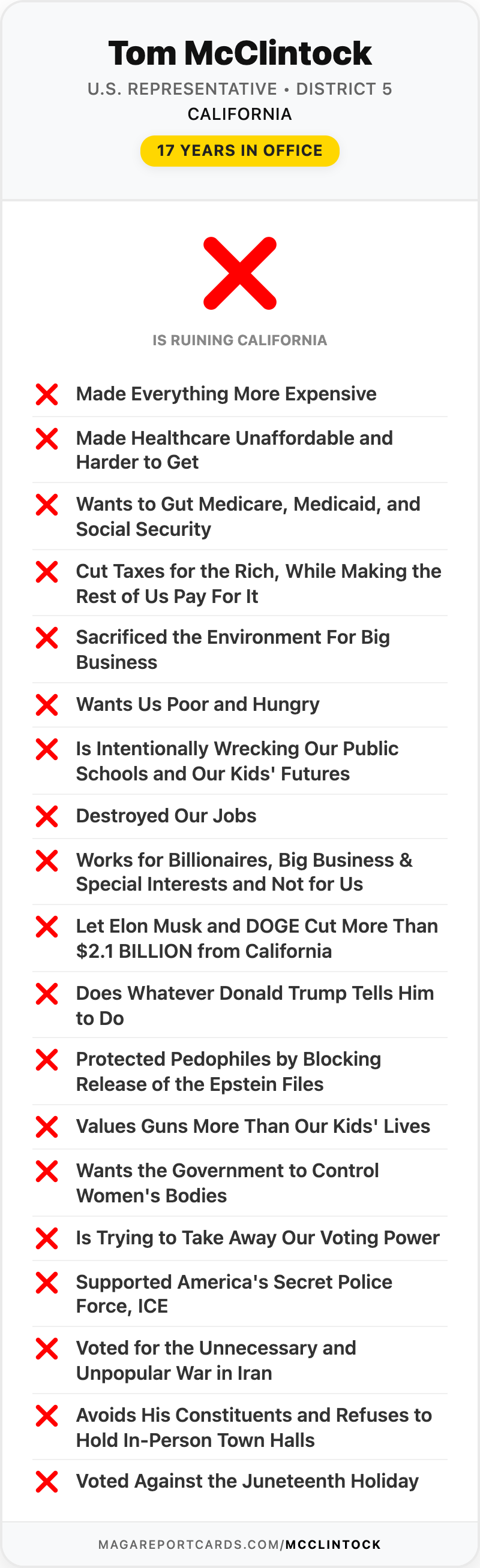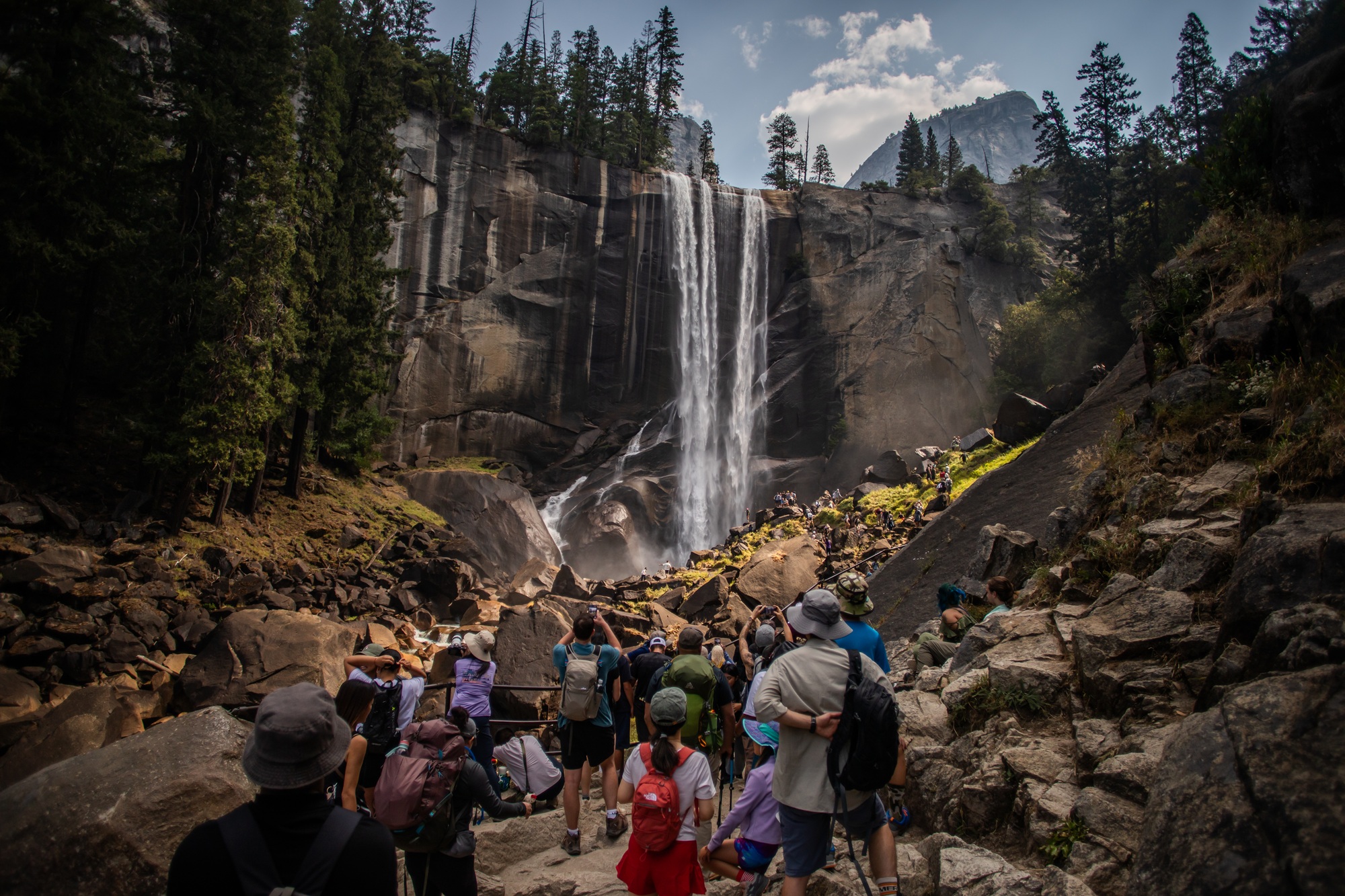
Yosemite National Park sits in Tom McClintock's Sierra Nevada district. He has been in Congress since 2009, and for years he has been the park's loudest congressional critic of anything that limits how many cars can drive in.
In February 2026, he got what he wanted. The Interior Department scrapped Yosemite's timed vehicle reservation system for the 2026 season, along with the systems at Arches in Utah and Glacier in Montana.
Here is what happened next, and what he said about it.
What advocates warned would happen
The reservation system had run since 2020, after record visitation in 2019. Park advocates said scrapping it — with staffing already reduced — was a mistake.
Mark Rose, Sierra Nevada program manager for the National Parks Conservation Association, warned of hours-long waits to get in and visitors turned away for lack of parking:
"The park experience that you're gonna get at Yosemite this summer is something that nobody should have to face."
He was most worried about the Fourth of July, which this year is also a free-entry day under the Trump administration's revised fee-free calendar — a calendar that, in the same revision, removed Martin Luther King Jr. Day and Juneteenth.
The National Parks Conservation Association called the decision a choice to ignore "Park Service leadership and expertise," and cited 25% forced cuts to park staff across the country. Of the identical decision at Arches, NPCA's Cassidy Jones said "Interior Department leadership chose chaos over conservation, at the expense of millions of visitors to Arches."
What actually happened
It went the way they said.
The Fresno Bee's Joshua Tehee reported on July 2 that National Park Service data showed visitation up as much as 45% in March alone. By May, the park had gridlock — long vehicle queues at the entrances and overflowing parking at El Capitan and Half Dome. Park advocates described it as "pure chaos for visitors."
Senators Alex Padilla and Adam Schiff wrote to Interior Secretary Doug Burgum and acting Park Service Director Jessica Bowron just before the Fourth of July, warning that increased visitation combined with reduced staff and resource constraints had created "critical gaps in park operations" touching wildfire management, visitor safety and resource conservation. They asked Interior to reinstate the reservation system if the peak season proved too much.
McClintock's response
On June 15, 2026 — after the Memorial Day gridlock, before the Fourth of July — McClintock spoke about the park and rejected calls to bring the reservations back.
What he said about the people raising concerns:
"Those complaining of crowds during peak weekends, of course, envision that they should be able to enter the park, but not all of those 'pesky other people.' Well, here's a helpful tip: If you don't like crowds, don't go to the beach on Memorial Day and don't go to Yosemite on Memorial Day."
That is a congressman telling constituents who can't get into their own national park that the problem is their attitude. His stated solution was "better management and more capacity, not restricting access." What he pointed to was the new superintendent's program: digitized entry passes, more wifi, more parking, and encouraging visitors toward overlooked spots like Tuolumne Meadows and Glacier Point.
Not more rangers. More parking.
"Ten. Ten probationary employees."
This is the part that connects to everything else McClintock has been doing.
In February 2025, when Yosemite employees hung an upside-down American flag on El Capitan to protest federal layoffs, McClintock wrote a column dismissing the whole thing as a bureaucratic stunt — "the Washington Monument Strategy," he called it, in which agencies make cuts hurt on purpose so tourists complain.
"What is the actual number of layoffs at Yosemite National Park that will bring this beautiful Valley to rack and ruin? Ten. Ten probationary employees. Ten out of nearly 500 full-time winter employees. Twenty-five if you include early retirements. And no fire fighters."
That was March 6, 2025. Fifteen months later the park was in gridlock, two U.S. senators were writing to Interior about "critical gaps in park operations," and the advocacy group that tracks this for a living was pointing at a 25% national cut to park staff.
McClintock's enthusiasm for the cuts was never in doubt. Arguing for the budget resolution on the House floor, he said out loud: "But in DOGE we trust. I think we CAN achieve a trillion dollars in savings as a result of its work."
A pattern of not being in the room
There is a reason no constituent got to put any of this to him directly.
When constituents organized their own town hall in Modesto in March 2025, nearly 200 people showed up and McClintock declined the invitations. Speakers addressed their questions to a cardboard cutout of him. His office dismissed the event as "a nationally coordinated campaign by a group called Indivisible."
His record on the park's other threats runs the same direction. He has a 3% lifetime score from the League of Conservation Voters. He voted against the bipartisan infrastructure law, which delivered more than $5 billion for federal wildland fire management — two weeks after the Caldor Fire was contained, having burned 221,835 acres of the district he then represented and destroyed about two-thirds of the town of Grizzly Flats.
And when the fee-free calendar dropped Juneteenth, it was worth remembering that McClintock was one of only 14 House members who voted against making Juneteenth a federal holiday in the first place, on a bill that passed 415 to 14.
Yosemite belongs to the people, as his column title said. This summer, a lot of them sat in line for hours and then couldn't park.
Source
McClintock Praises Yosemite Changes, Pushes Back Against Overcrowding Concerns — B.J. Hansen, myMotherLode.com, June 15, 2026. Photo: Apu Gomes/Getty Images, via KQED.