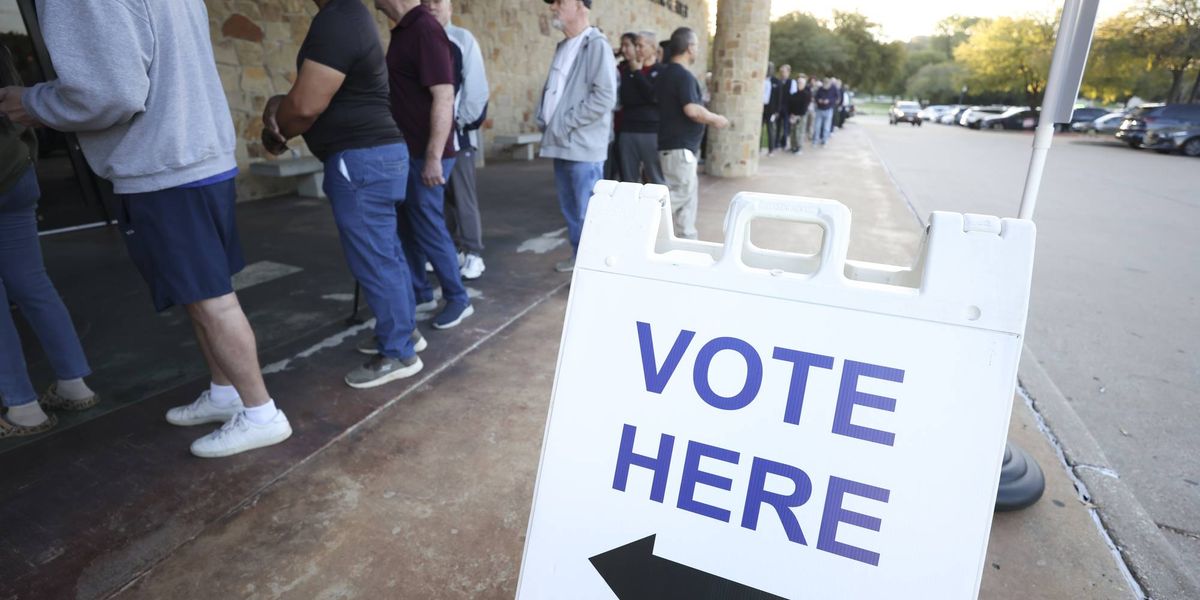
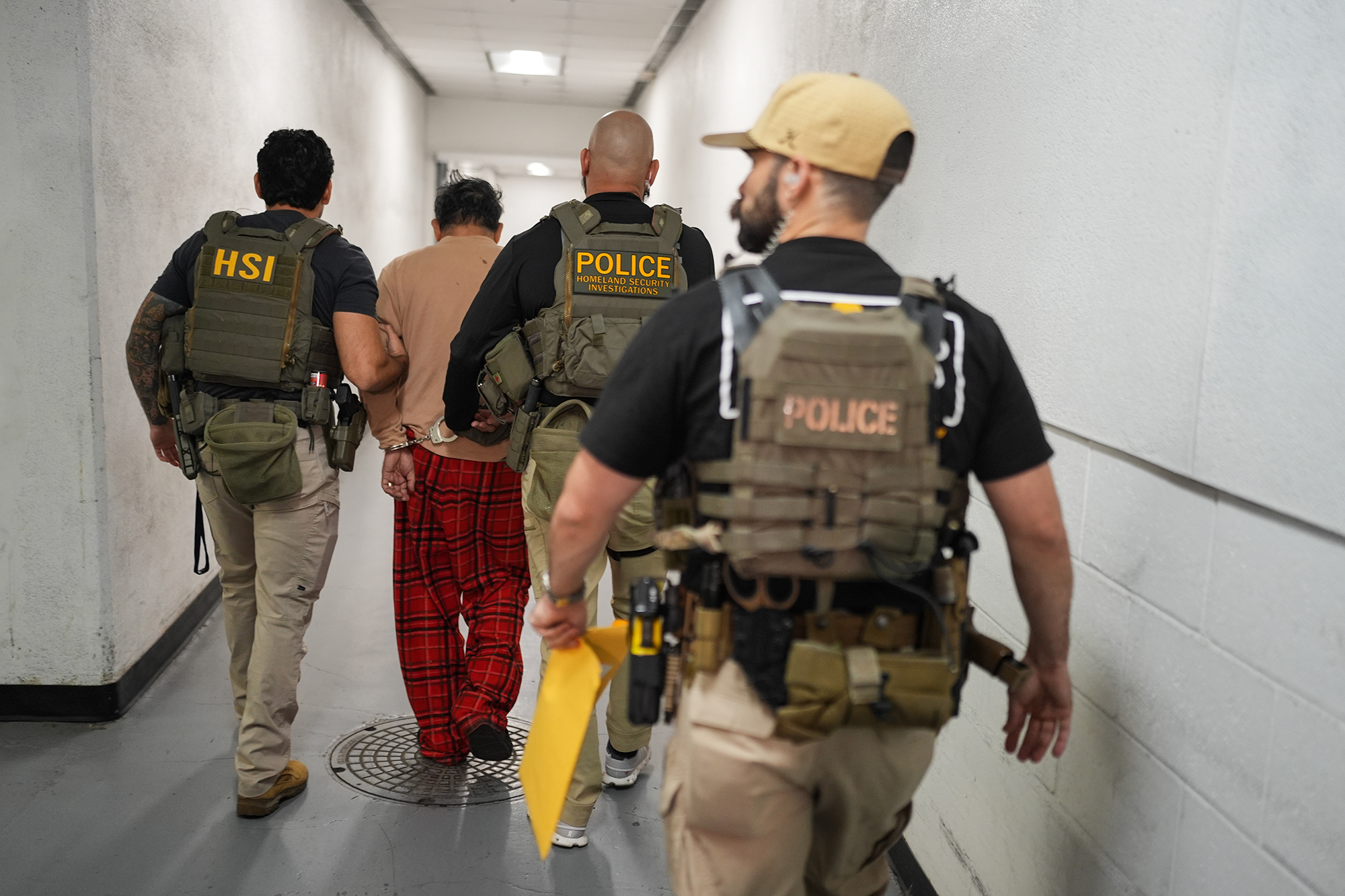
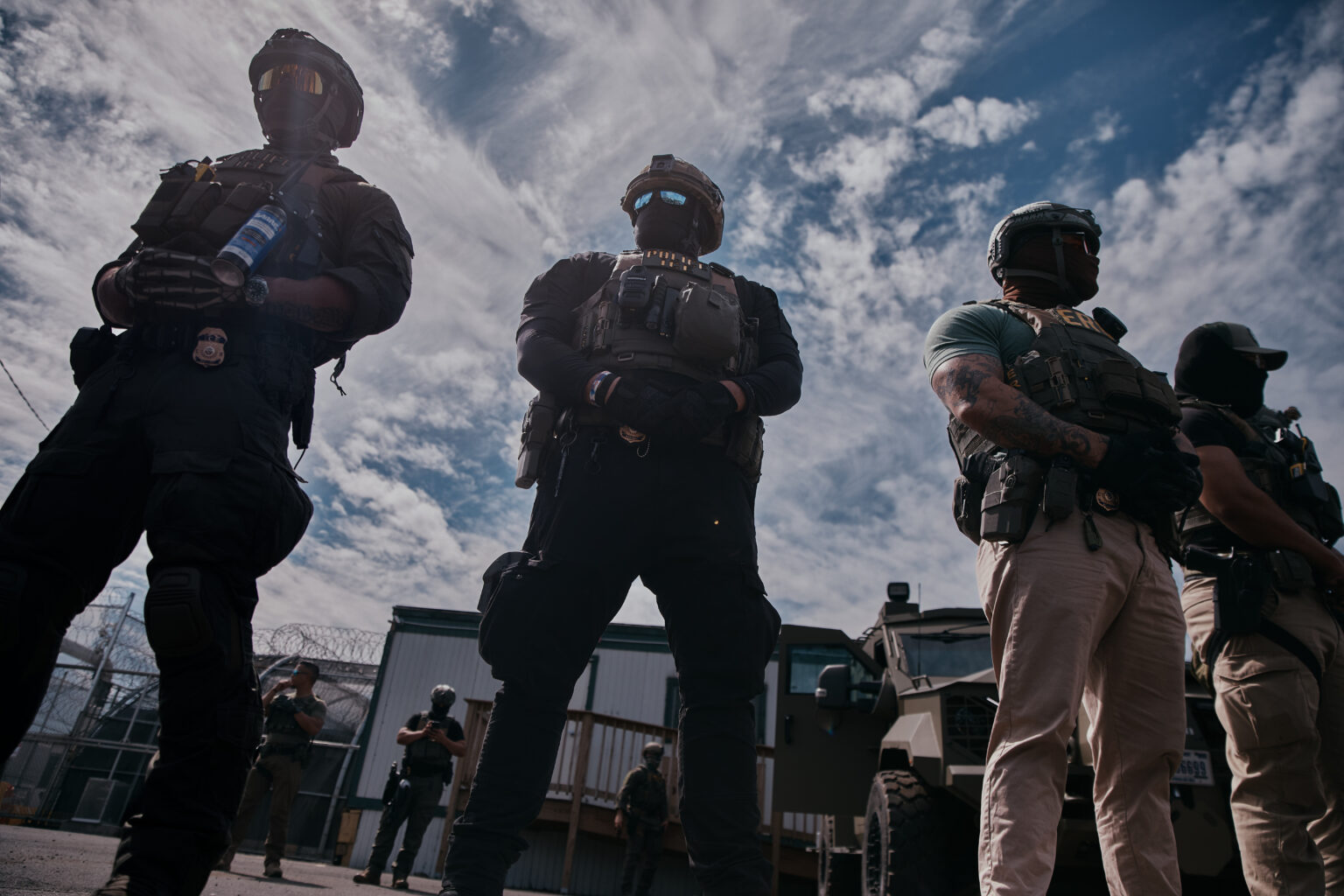
Early voting is about to open in a number of states. The Secretary of Homeland Security has said armed immigration officers may be at the polls.
On Thursday, September 10, four plaintiffs asked a federal court to stop it: the League of United Latin American Citizens, the oldest Latino civil rights organization in the country; UnidosUS, the largest; the voter mobilization group Common Cause; and the city and county of Denver, which ICE has targeted repeatedly.
Their argument is short. A federal law written during the Civil War bars armed federal agents from polling places, and it allows exactly one exception.
The one exception the law allows
The statute permits "troops" or "armed men" at a polling location only if "such force be necessary to repel armed enemies of the United States."
The plaintiffs say it was written out of a specific fear — "about executive overreach, and the risk that the federal executive would use armed force to interfere in state and federal elections" — and that this is what is happening now.
"The specter of armed officers at polling places threatens the freedom of this upcoming election," the lawsuit reads. "It places voters in fear that they will be confronted by armed federal immigration enforcement officers if they choose to cast a ballot."
The suit asks the court to bar officers from operating or carrying weapons anywhere near an open polling place — including drop boxes, curbside voting locations, and anywhere ballots are collected or counted — for any reason other than repelling an armed enemy.
What DHS actually said
Homeland Security Secretary Markwayne Mullin said earlier this month that ICE officers would be at polling locations "to enforce specific threats."
"The only reason why we would be at polling places, if there is a threat to that polling place or we're serving a warrant on someone that we have been actively tracking down."
A DHS spokesperson told States Newsroom that "ICE is not planning operations targeting polling locations," but added that if an "active public safety threat" endangered a polling location, people "may be arrested as a result of that targeted enforcement action."
That is not a denial. It is a description of the circumstances under which it would happen.
And the groundwork is already laid. Earlier this year the Justice Department scrapped its long-standing guidance restricting federal law enforcement activity at polling places. ICE agents then conducted enforcement actions at voting sites in Texas and New York.
The problem this is supposed to solve barely exists
The stated justification is noncitizens voting. Noncitizens cannot legally vote in federal elections, and almost none of them do.
A Reuters analysis this year found 73 people convicted of illegally voting as noncitizens in the last three decades.
The conservative Heritage Foundation, which maintains its own election fraud database and has every incentive to make the number look large, has identified about 100 cases of proven noncitizen voting going back to 2000. That is roughly 0.0001% of all votes cast in that time.
So the policy is armed federal officers at the polls during a midterm election, to catch a category of crime that has produced about a hundred proven cases in twenty-six years.
What it will actually do
Writing for the Democracy Project at NYU's law school, Stephen Richer — the former Republican recorder of Maricopa County, Arizona, where he ran voter registration and early voting — and Gina Goldenberg argued that America's decentralized, heavily early-voting election system would make widespread ICE interference a genuinely hard thing to pull off. Their worry is different, and it does not require the agents to ever show up.
"It's not too far-fetched to imagine a newly naturalized, brown-skinned American in Michigan who only casually follows political news, but hears that ICE might be at the polls. This person knows he's in a higher-risk category for being mistakenly apprehended by ICE, and he wonders, 'Why risk it?'"
The lawsuit notes that ICE has unlawfully detained more than 170 U.S. citizens and killed at least three since Trump took office. Citizens, the plaintiffs argue, "may reasonably fear interactions with ICE."
"Sending armed ICE officers to polling places is not immigration enforcement — it is voter suppression, plain and simple," said UnidosUS president Janet Murguía.
"Putting armed officers in polling places is a tactic used by dictators, but we won't be scared out of exercising our rights," said Common Cause president and CEO Virginia Kase Solomón.
This is one piece of a larger push
Mullin said in July that states could lose federal aid if they refuse to follow Department of Homeland Security directives on elections — anti-terrorism grant money held hostage to force states to change how they run their voting.
In July the administration asked the Supreme Court to let it restrict voting by mail, 99 days before the midterms.
And Republicans running for office have been explicit about wanting the agents there. Maine's Republican nominee for governor, Bobby Charles, told a room of young Republicans in August that he would call Tom Homan and ask for ICE agents and federal marshals at Maine polling places.
The bottom line
The Trump administration has adopted a policy allowing armed ICE officers to enter polling places in certain circumstances during the 2026 midterms, after the Justice Department scrapped the guidance that restricted federal law enforcement at the polls and ICE ran enforcement actions at voting sites in Texas and New York. The justification is noncitizen voting, which Reuters counted 73 convictions for in thirty years and which the conservative Heritage Foundation counts about 100 proven cases of since 2000 — about 0.0001% of votes cast. A federal law dating to the Civil War allows armed federal agents at a polling place only to repel an armed enemy of the United States, and LULAC, UnidosUS, Common Cause and the city of Denver sued on September 10 to enforce it.
Source
Suit challenges Trump administration move to allow some ICE presence at polling places — Ariana Figueroa, States Newsroom / Florida Phoenix, September 10, 2026, and 'Voter Suppression, Plain and Simple': Lawsuit Aims to Stop Trump From Sending ICE to Polling Sites — Julia Conley, Common Dreams, September 10, 2026. Photo by Tom Davies, Indiana Capital Chronicle.