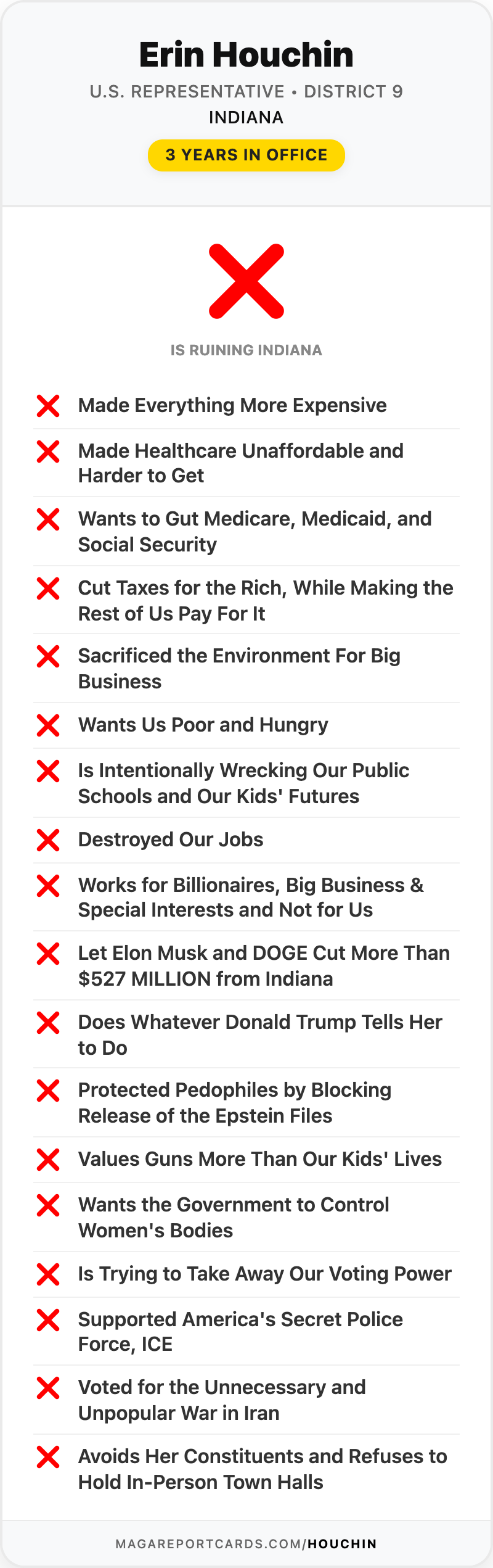
On September 30, 2025, Erin Houchin introduced a bill with no title.
Not a catchy one, anyway. H.R. 5629 is named, in full, "To provide that the final rule of the Department of Health and Human Services titled 'Medications for the Treatment of Opioid Use Disorder', except for the portion of the final rule relating to accreditation of opioid treatment programs, shall have no force or effect."
Translated: erase the rule that made it easier for people addicted to opioids to get the medication that keeps them alive.
Ten months later, it still has zero cosponsors. Not one other member of Congress, in either party, has put their name on it.
What the rule she wants gone actually did
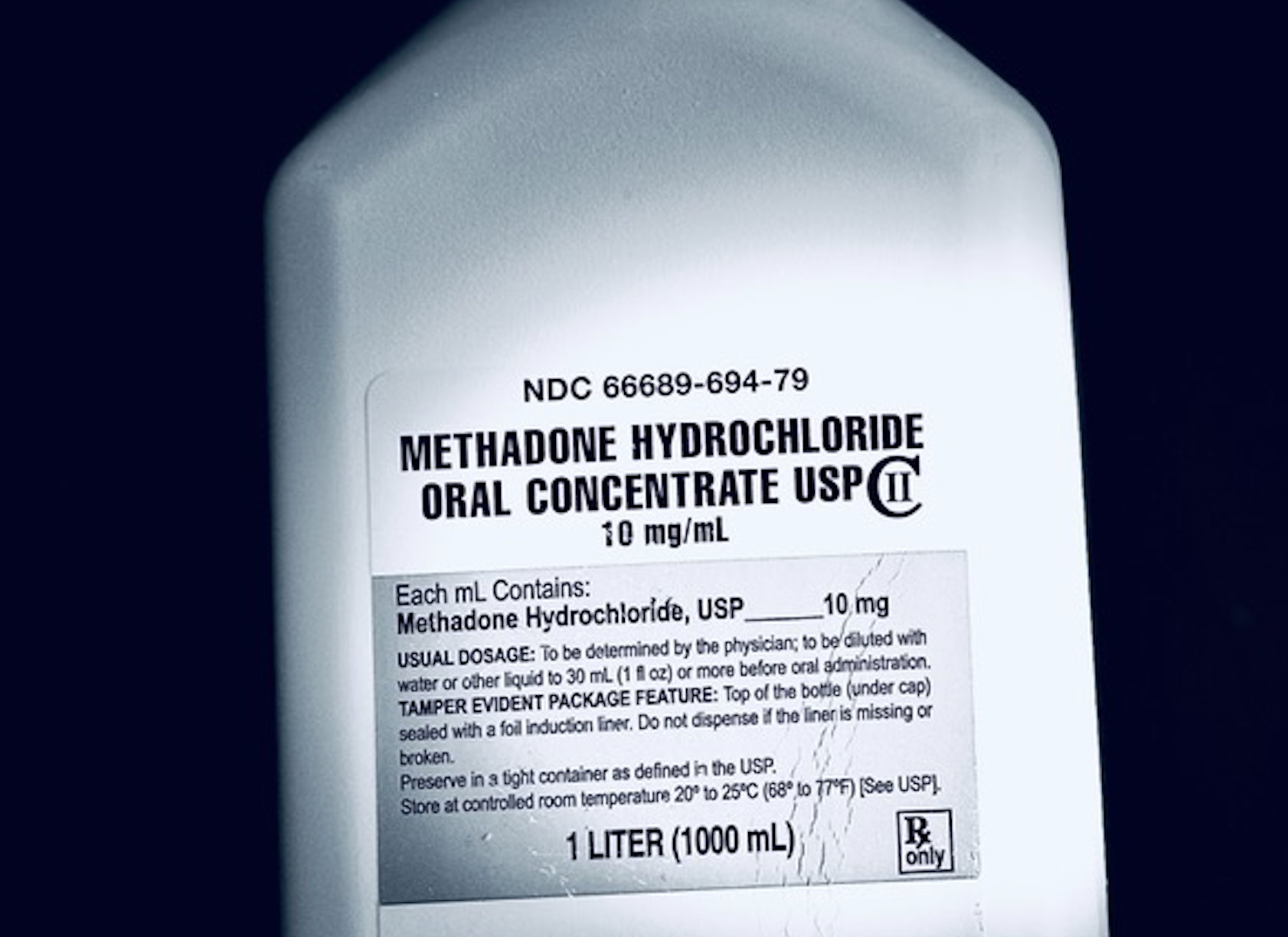
During COVID, the federal government loosened the rules on methadone clinics because forcing thousands of patients to stand in line every single morning during a pandemic was dangerous. In 2024, after watching the results, the Substance Abuse and Mental Health Services Administration made those changes permanent.
The 2024 rule did three things:
- Let patients take home up to seven days of doses in their first two weeks of treatment, and up to 28 doses in a month, instead of showing up at a clinic daily.
- Dropped the requirement that you must prove at least a year of opioid addiction before a clinic will admit you.
- Allowed treatment with methadone or buprenorphine to be started by telehealth.
Houchin's bill nullifies all of it.
Houchin sits on the House Energy and Commerce Committee, which handles the bill. At a hearing of its Health Subcommittee in March 2026, she explained her thinking: "Medications like methadone are effective for some, but are also associated with serious risks, including respiratory depression, cardiac complications, potential for misuse and diversion and dangerous interactions with other substances, particularly in today's environment where illicit drugs are increasingly potent and unpredictable."
Filter, which covered the hearing, reported that she also claimed methadone-related overdose deaths rose during the pandemic because of the expanded take-home doses — a claim the magazine reported has been debunked by studies conducted during and after the pandemic. Methadone treatment, Filter noted, cuts overdose deaths by more than half. Her office did not respond to the magazine's requests for comment.
Nearly everyone who treats addiction told her no
The opposition to this bill is not partisan. It's clinical.
The Drug Policy Alliance's federal policy manager, Daniel Fishbein, laid out the mechanics: "Currently, 80 percent of US counties do not have an OTP, meaning many people who are prescribed methadone must travel hours and wait in line just to get one daily dose. Eliminating take-home doses could make it impossible for someone who relies on this lifesaving medication to continue care — putting people's recovery at risk, throwing them into painful withdrawal, and potentially driving them back into the illicit market."
The American Association for the Treatment of Opioid Use Disorder — the clinics' own trade group — filed a statement of "serious concerns," joined by more than 25 organizations. Its president, Mark Parrino, put it bluntly: "The Congresswoman does not seem to like methadone treatment."
A coalition including the American Society of Addiction Medicine and the American Academy of Family Physicians warned in a March 2026 letter that if the bill became law, "it would result in more opioid overdoses, because fewer people would get methadone treatment."
Recovery groups in the region weighed in too. People Advocating Recovery and allied organizations sent lawmakers a statement for the record, reported by Spectrum News, saying they were "deeply concerned that repealing the OTP Final Rules would set our nation backwards just as we are starting to make progress in our fight against opioid misuse and overdoses." Dr. James Murphy, a pain and addiction specialist practicing in Kentucky and Indiana, described what it means in rural country: "If you don't get this medication from somebody who was willing to prescribe it, you're not going to have it."
Scott County
Here is why this bill, from this member, is worth stopping on.
All five townships of Scott County, Indiana sit inside the district Houchin represents. So does Salem, the Washington County town her official biography lists as her hometown.
In 2015, the town of Austin, in Scott County, population 4,132, became the site of one of the worst rural HIV outbreaks in American history. More than 230 people were infected. Of the almost 200 who tested positive in 2015, about 80 percent lived in Austin. Governor Mike Pence declared a public health emergency.
The cause was injection drug use. People were crushing and liquifying a painkiller called Opana and injecting it, sharing and reusing the same syringes, because Indiana had banned handing out clean ones. Of the 181 people diagnosed in the first year of the outbreak, 92.3 percent were also infected with hepatitis C.
The county's syringe exchange — the first in Indiana — ran for six years and was shut down in 2021 when county commissioners declined to renew it. Testing dropped off after that.
So this is a district that has already run the experiment on what happens when you make it hard for people who use drugs to reach a clinic. The answer arrived in 2015, and it made international news.
Indiana already has some of the tightest rules in the country
Houchin's bill wouldn't be operating on a permissive system. Filter's reporting notes that Indiana caps take-home methadone at 14 doses, caps the total number of clinics allowed in the entire state at 27, and requires a "certificate of need" to open a new one — a process that lets neighborhood opposition groups block clinics before they exist.
There's one more thing about the rule she wants to repeal: it's a permission, not a mandate. The 2024 changes are recommendations. Each clinic decides whether to adopt them, and many don't. Houchin is spending her legislative capital repealing regulations that clinics are already free to ignore.
And she voted to cut the program that pays for the treatment
Medicaid is the single largest payer for substance use disorder treatment in the United States. Roughly 40 percent of people with opioid use disorder rely on it for coverage.
Houchin voted for the 2025 budget bill that cuts it. In her own district, an estimated 22,748 people are projected to lose health coverage — 11,748 losing Medicaid and 11,000 losing Affordable Care Act coverage by 2034, according to the Joint Economic Committee's House minority.
So the plan, taken together: cut the insurance that pays for addiction treatment, then pass a law making the treatment itself harder to reach.
When the Indiana Democratic Party wanted to ask her about her record in April 2025, they had to hold a town hall with an empty chair and a sign with her name on it. About 80 people showed up in Bloomington. The state party said her office never answered the emailed invitation.
Houchin has represented Indiana's 9th District since 2023. Her bill has been sitting in committee since September, with no cosponsors and no path — which is its own kind of statement about what she thinks her constituents need.
Source
Federal Bill Would Roll Back Modest Progress on Methadone Access — Helen Redmond, Filter, April 13, 2026. Photo: Helen Redmond / Filter.