Iowa has the second-highest and fastest-rising cancer rate in the United States. That's not an advocacy group's talking point — it's the Iowa Cancer Registry at the University of Iowa. Experts say one possible cause is water pollution from the state's own agriculture industry.
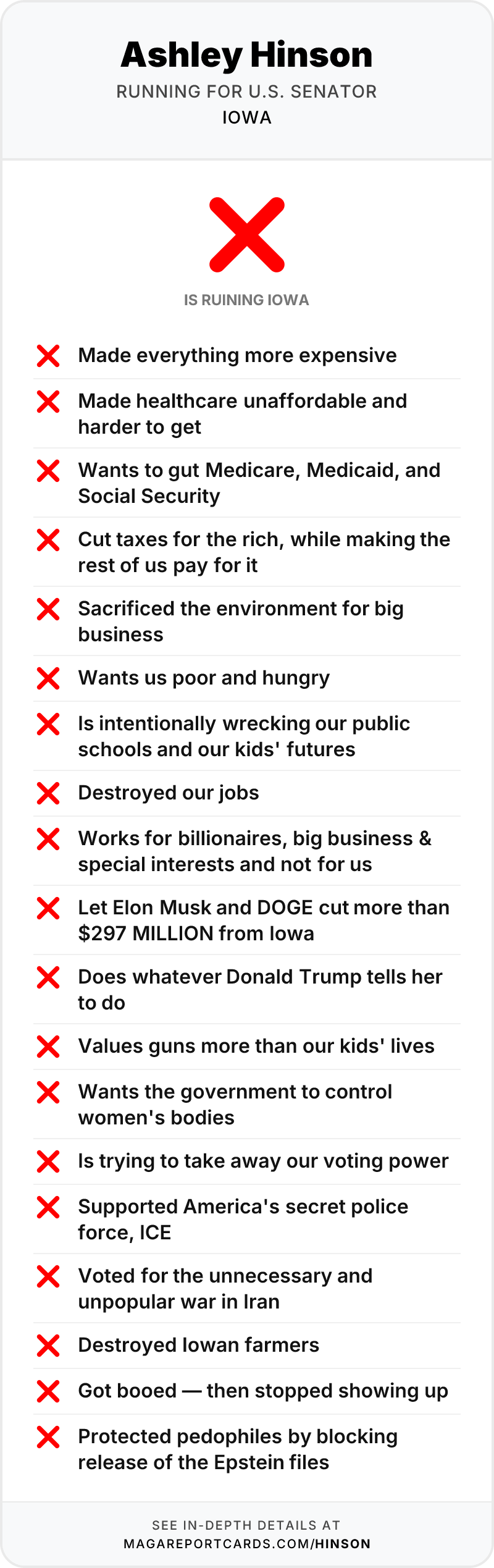
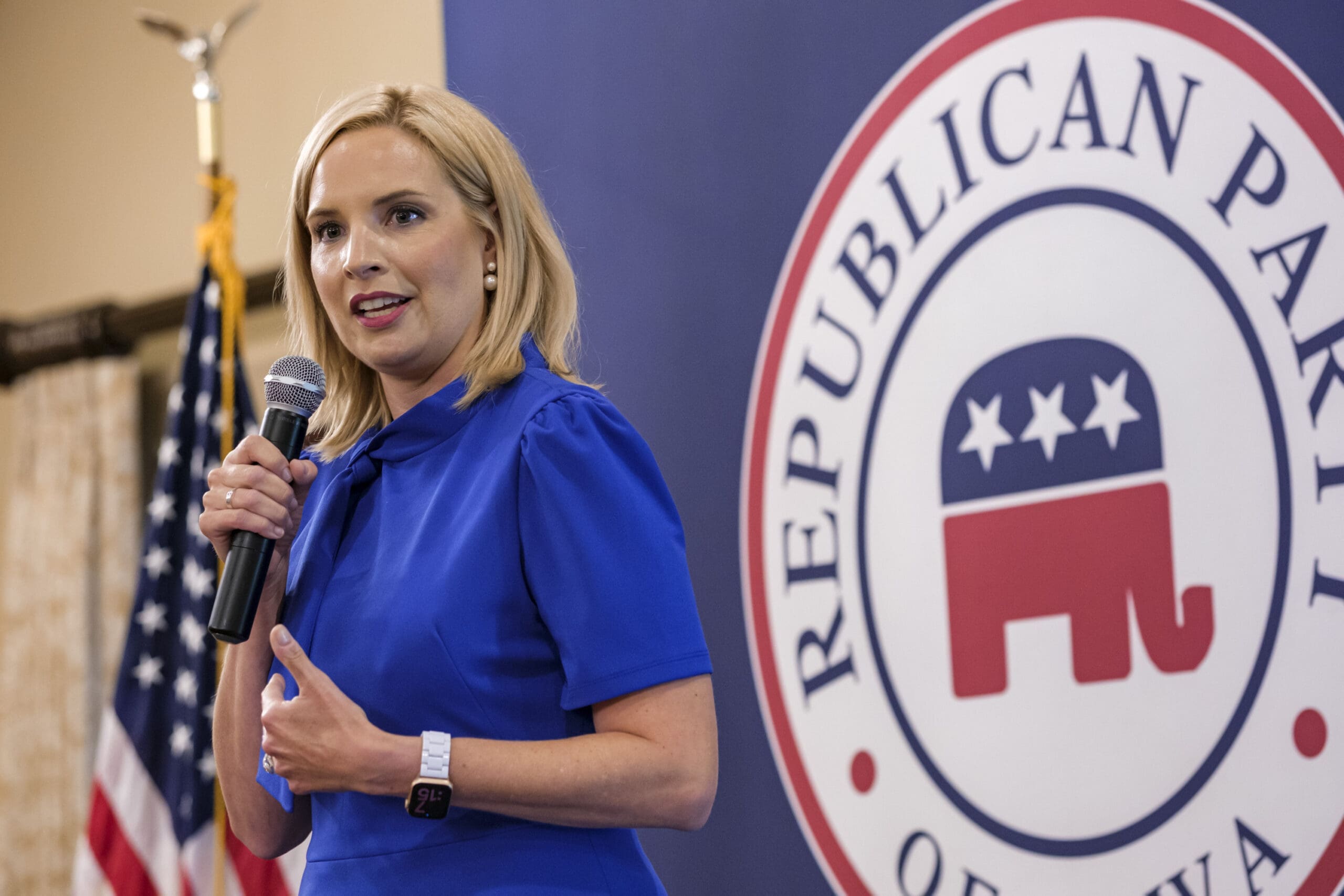
Ashley Hinson wants to be Iowa's next United States senator. A review of Federal Election Commission filings by the Iowa Independent found her campaign has taken more than $77,000 from the political action committees of pesticide manufacturers and large meat companies.
Her opponent, state Rep. Josh Turek, took nothing from agricultural industry PACs. His campaign says it accepts no corporate PAC money at all.
Who wrote the checks
From pesticide makers — at least $23,500:
- $12,500 from Corteva, Inc., which announced in April it would discontinue its herbicide Enlist Duo amid allegations its ingredients caused cancer. The company cited market factors. Other Corteva products linked in at least one scientific study to cancer are still on the market.
- $6,000 from Bayer US LLC — the maker of Roundup, whose main ingredient glyphosate has been linked in some studies to increased risk of non-Hodgkin lymphoma.
- $2,500 from Syngenta, maker of paraquat and atrazine.
- $2,500 from CropLife America, the trade association whose members include all three of the above.
From the meat industry — at least $53,750:
- $35,000 from PorkPAC, the National Pork Producers Council's committee
- $8,500 from Tyson Foods
- $5,500 from Cargill
- $3,500 from JBS USA
- $1,250 from Smithfield Foods
The pesticide makers that answered deny their products are dangerous. A spokesperson for the U.S. subsidiary that makes Roundup said glyphosate "has been used safely for 50 years" and that no regulatory authority in the world has determined it causes cancer. Syngenta said claims about atrazine are "wholly inconsistent with the scientific consensus." CropLife said pesticides "are among the most thoroughly studied and highly regulated products in the world."
Those are their positions. They're entitled to them. What isn't in dispute is who gave the money, or what Hinson did in Congress.
What she did for them
This is where the story stops being about donations and starts being about votes.
During her time in Congress, Hinson has repeatedly voted to weaken federal clean water restrictions. She proposed a bill that would bar states from regulating livestock products sold within their own borders — stopping states from setting standards for how the meat they sell is raised in other states.
And in April 2023, she joined House Republican colleagues in signing a letter to the EPA defending atrazine as "a reliable and proven herbicide for effective and efficient sustainable farming practices." Atrazine is a Syngenta product. Syngenta's PAC is one of her donors.
Hinson's campaign and congressional office did not immediately respond to the Iowa Independent's request for comment.
The water is the whole story
Here's why the meat money and the pesticide money belong in the same sentence.
Iowa's factory farms produce 300 million pounds of manure a day, according to the nonprofit Food & Water Watch. Some of it goes on fields as fertilizer. When it runs off fields, it can end up in the water supply.
Then the water gets disinfected for drinking — and the disinfection process can react with that manure to create trihalomethanes, compounds that studies show can increase cancer risk.
So the chain runs: manure in the field → runoff into the water → chemical reaction at the treatment plant → higher cancer risk at the tap.
Iowans drink that water. Their kids drink that water.
She is not the only one
Iowa's delegation has a pattern here. Rep. Zach Nunn took $30,000 from pesticide makers and then backed a bill to shield them from cancer lawsuits — after the U.S. Supreme Court ruled that people who believe glyphosate gave them cancer no longer have the right to sue.
Hinson's own record has other threads running through it. She has taken money from the CEO who built Iowa's carbon pipeline push, and she's been caught running a false attack ad against the same opponent who's refusing corporate PAC money in this race.
What a senator from Iowa is for
There's a version of this job where the person Iowa sends to Washington looks at the fastest-rising cancer rate in America and treats it as the emergency it is. Tighter limits on runoff. Real testing. Money for the Cancer Registry. Pressure on the EPA instead of letters defending its chemicals.
Hinson took the money and did the opposite. She weakened the water rules, tried to bar states from setting standards for meat raised elsewhere, and signed a letter to the EPA on the industry's behalf.
Iowa's cancer rate is rising faster than any other state's. Their next senator is being funded by the industries most implicated in why.
Source
The Iowa Independent, "Ashley Hinson's campaign has received $77,000 from pesticide and meat industry PACs," by Josh Israel, August 5, 2026. Photo: Nick Rohlman/The Gazette via AP.