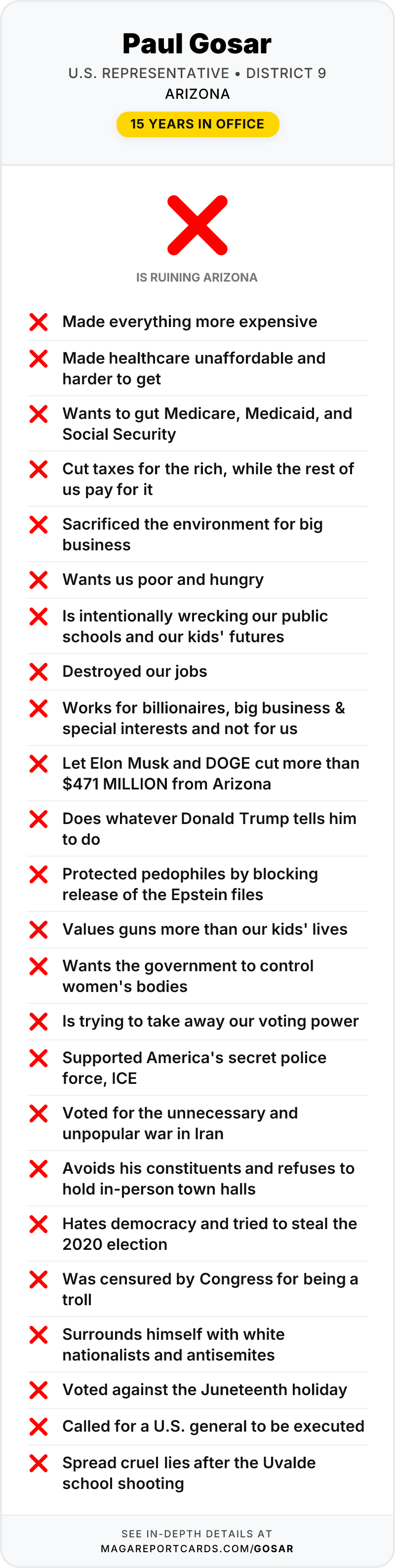
On the very first day of this Congress, Paul Gosar introduced a bill numbered H.R. 34. He called it the Land And Social Security Optimization Act. LASSO.
The pitch is simple enough that it fits on a bumper sticker: take 10% of the money the federal government earns off public lands and put it into Social Security.
The problem is what has to happen for that to mean anything.
What the bill actually says
Per the nonpartisan summary from the Congressional Research Service, the bill "requires 10% of revenue generated by public lands, including submerged lands on the Outer Continental Shelf, under the jurisdiction of the Department of the Interior and the Forest Service to be deposited into the Federal Old-Age and Survivors Insurance Trust Fund."
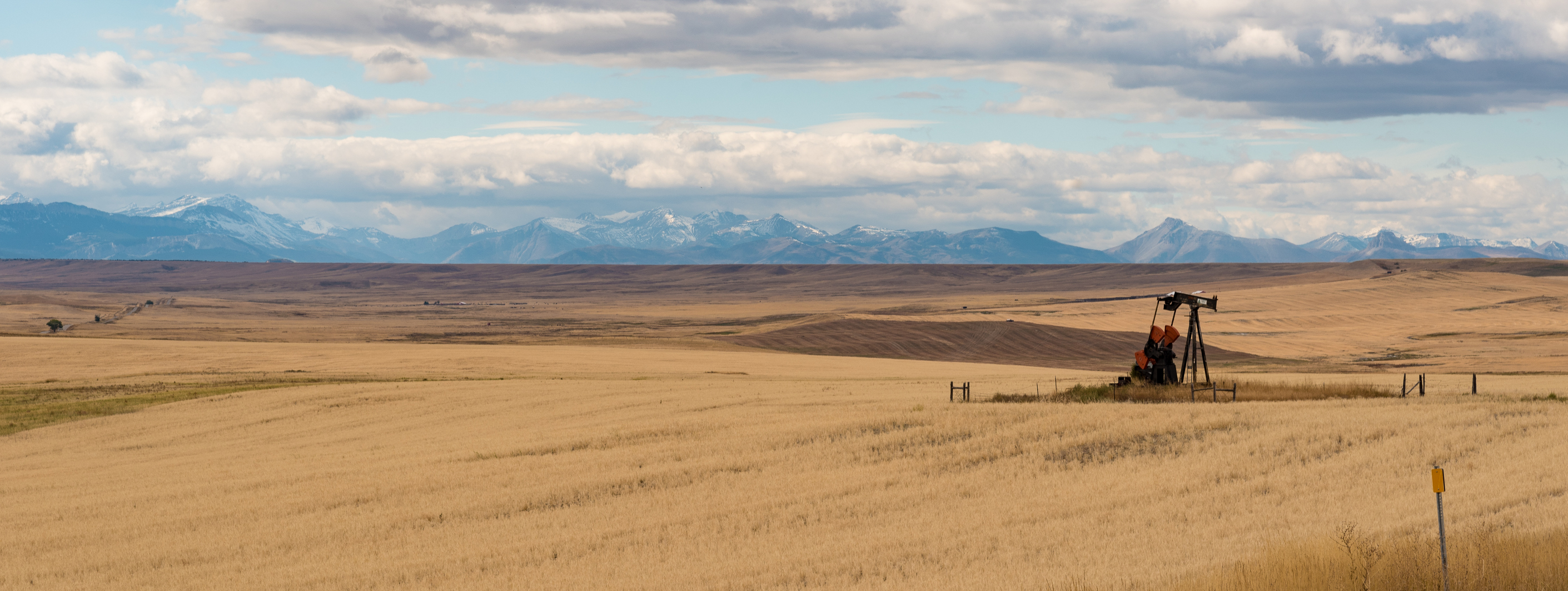
That revenue does not appear from nowhere. It comes from leases and royalties — oil and gas drilling, mining claims, timber sales, grazing permits, offshore energy.
Gosar is not shy about this. It is the point. Here is his own announcement, in his own words:
"This legislation is a win-win. The LASSO Act shores up the component of the Social Security trust funds that pays Social Security benefits to retired workers... It also unlocks domestic energy potential by encouraging activities that generate revenue on public land, including onshore and offshore energy development, livestock grazing, and timber harvesting. This maintains the federal government's obligation to promote the highest use of public lands. Despite this obligation, our public lands are underperforming, and more than 1.6 million acres of public lands were locked up under the Biden Administration."
"Underperforming." "Locked up." Those are the words of someone who looks at a canyon and sees an unmet quarterly target.
The math does not work, and a conservative said so
Gosar put a number on it. If the LASSO Act had been law in fiscal 2023, he said, "nearly $2 billion would have been deposited into the OASI Trust Fund, reducing the Trust Fund's FY 2023 shortfall of $70.4 billion by 3%."
That claim got checked — not by an environmental group, but by Romina Boccia and Ivane Nachkebia, who write the fiscal-policy newsletter The Debt Dispatch. Boccia is the Cato Institute's director of budget and entitlement policy, and before that ran the federal budget center at the Heritage Foundation. She is about as far from a critic of spending cuts as it is possible to get.
Their finding, in February 2025:
- Gosar understated the shortfall by half. "The real annual shortfall was $133.4 billion — double Gosar's estimate."
- He did it by counting money that isn't there. Gosar's smaller number treats the trust fund's interest income as revenue. But that "figure represents interest on trust fund assets that exist only on paper" — when Treasury pays interest to Social Security, it borrows to do it.
- So the bill covers a rounding error. "The $2 billion in land revenues would cover just 1.5 percent of the annual gap."
They also flagged the bigger risk: Social Security's long-term funding gap "exceeds $25 trillion," and bolting on a general-fund revenue stream normalizes the idea that the program gets bailed out from elsewhere rather than fixed.
One and a half percent. That is the whole bill.
What 1.5% buys you
If the LASSO Act did nothing, it would just be a wasted bill number. But it does something, and the something is the part worth paying attention to.
It permanently ties Social Security's funding to how aggressively we extract from public land.
Once that link exists, every fight about a drilling lease, a mine, a timber sale, or a grazing allotment gets a new argument attached to it: this is for seniors. Every acre protected becomes, on paper, money taken from retirees. Gosar has already written that framing into his own press release — 1.6 million acres "locked up," public lands "underperforming."
That is not a side effect. It is the mechanism. Federal land earns its money from energy, mineral and timber leases and royalties, grazing and recreation fees — and the activities the bill's own sponsor says it will encourage are energy development, livestock grazing and timber harvesting.
He is on the committee, and he wants the hearing
This is not idle messaging. Gosar sits on the House Natural Resources Committee, per the House Clerk's official member roster — the committee with jurisdiction over exactly these lands and exactly this revenue.
On February 10, 2026, the Natural Resources Subcommittee on Federal Lands held a hearing on the LASSO Act. The National Association of Counties, which tracks these revenue formulas closely because counties depend on them, noted that the bill is written so no state or county payment gets reduced.
So the counties are held harmless. Seniors get 1.5% of one year's gap. And the public lands get a permanent new reason to be opened up.
Naming it after Social Security is the tell
Read Gosar's own statement again and count the sentences. One is about retirees. Three are about energy, grazing, timber, "highest use," and acres locked up.
The LASSO Act is a public lands bill wearing a Social Security nametag. It moves a small amount of money and a large amount of political cover: any future vote to open protected acreage can now be described as protecting your grandmother's check.
Arizona seniors who are worried about Social Security are worried about a real thing. The answer their congressman offers covers one and a half percent of a single year's gap, according to a conservative budget analyst who ran the numbers and found Gosar's own figure was off by a factor of two.
The other 98.5% is still there. So is the argument he has now attached to every acre in the state.
Source
- H.R. 34, the LASSO Act — Rep. Paul Gosar's announcement, January 3, 2025
- LASSO Act preserves county revenue sharing, directs public lands funds to Social Security — National Association of Counties. Photo: Getty Images via NACo.