On October 1, 2026, a new rule from Trump's budget bill took effect. Refugees and asylees who don't yet have a green card, and many others who are in the country legally, can no longer qualify for Medicaid, KFF reports.
Green-card holders and Cuban and Haitian entrants keep their eligibility. Many of the other immigrants who are here legally don't.
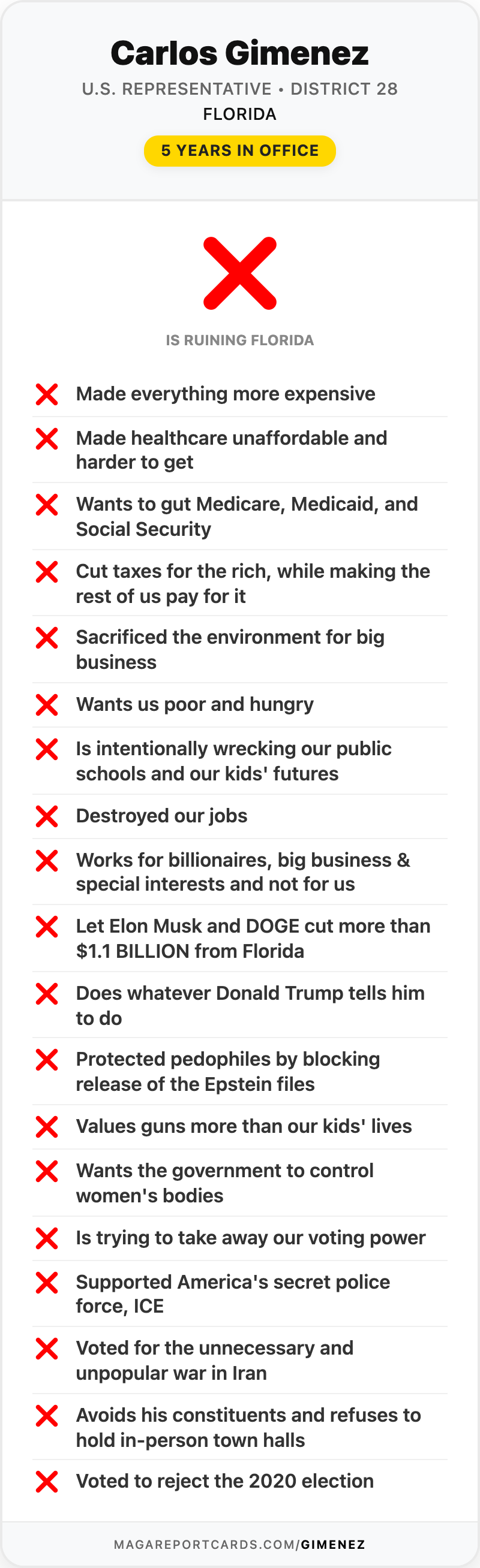
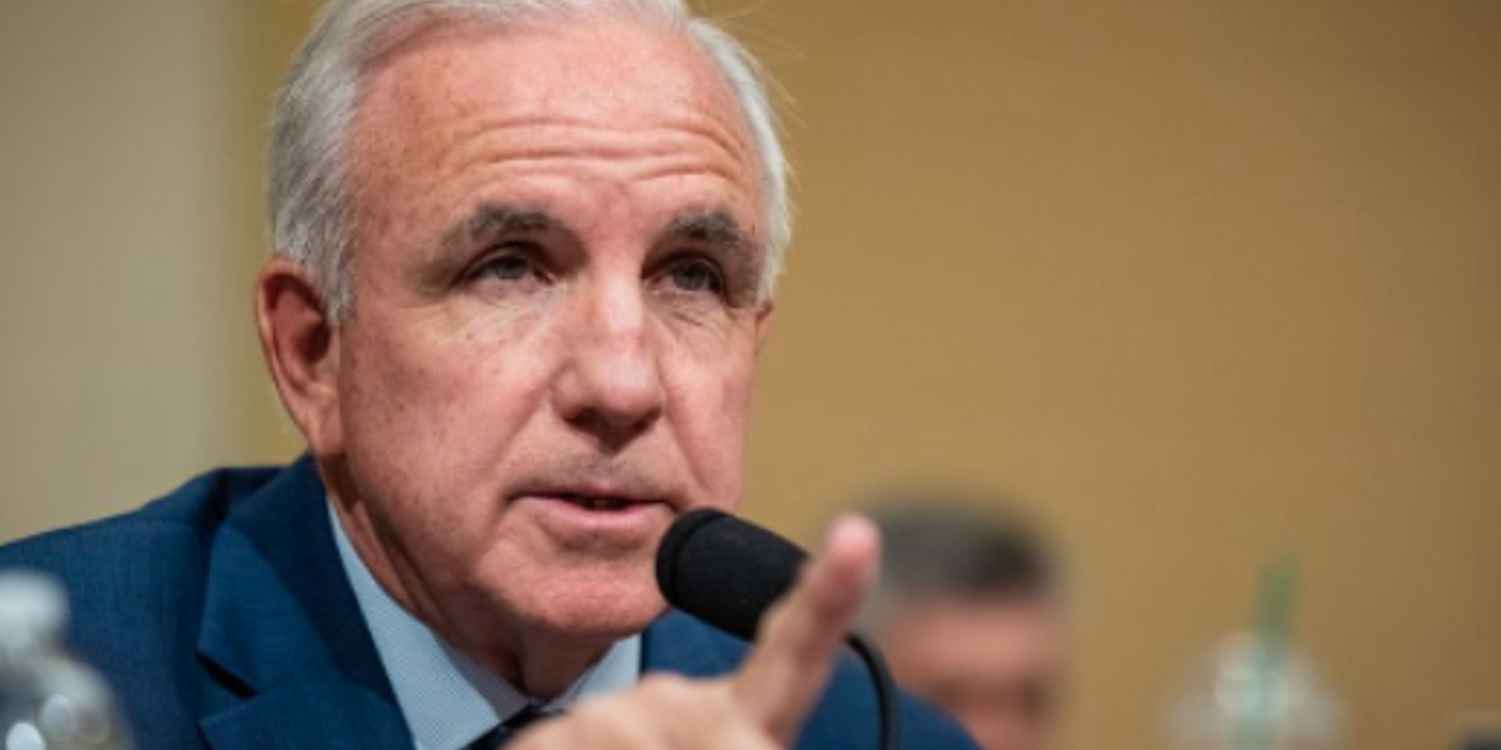
Carlos Gimenez represents a district in Miami-Dade County and the Florida Keys. He voted for that bill. He voted for it twice.
Two votes
The budget bill, the one Republicans called the "One Big Beautiful Bill," first passed the House on May 22, 2025. Gimenez voted yes. The Senate changed it, and it came back to the House for a final vote on July 3. Gimenez voted yes again. Trump signed it the next day.
Here is what the bill does to the two programs that keep low-income families fed and insured:
- Medicaid: it cuts close to $1 trillion over 10 years. The Congressional Budget Office says the law will leave 10 million more Americans without health insurance.
- SNAP (food stamps): it cuts federal funding by $187 billion over 10 years, according to the Florida Policy Institute.
A few days before the final vote, Gimenez went on Fox Business and explained what mattered to him. "What is more important is that we pass the bill and that we are not responsible for the largest tax increase in American history," he said. The Floridian's account of the interview doesn't mention Medicaid or SNAP.
The SNAP cuts already hit his district
The SNAP cuts didn't wait. The Florida Policy Institute found that in the first five months after the bill passed, Florida's SNAP rolls shrank by 277,513 people, roughly 10%.
- Every county in Florida saw a big drop. The steepest, about 14%, was in Monroe County, the Florida Keys, which is entirely inside Gimenez's district. Collier County, around Naples, tied it.
- Florida's own Department of Children and Families estimates about 9,753 people who are in the country legally lost their food assistance because of the bill's new limits on which immigrants can get SNAP.
- The bill's tougher work-paperwork rules put the benefits of about 181,217 Floridians at risk almost right away.
In Gimenez's district, 47,679 households rely on SNAP, about 1 in 5. That includes 20,924 households with children and 30,595 with someone 60 or older, according to the U.S. Department of Agriculture.
Children are losing more than groceries. School free-meal funding is tied to how many families are on SNAP. Miami-Dade schools have ended universal free meals at all but 121 of their 500-plus schools, though the district blames "changing demographics, fewer newcomer students enrolling in our schools, and other enrollment trends", not SNAP.
The biggest Medicaid cuts come after you vote
Most of the Medicaid cuts haven't started yet, and that's on purpose. The bill's work requirements start January 1, 2027, two months after this November's election. We've laid out the full schedule.
Florida is also one of 15 states facing the deepest cuts to what Medicaid pays doctors and hospitals, starting in 2028. When those payments shrink, Medicaid patients have a harder time finding care.
And the immigrant rules keep going. The same bill ends subsidized ACA marketplace coverage for refugees, asylees and people with Temporary Protected Status on January 1, 2027. The Congressional Budget Office estimates that marketplace restriction will leave 900,000 more people uninsured in 2034, on top of 100,000 from the Medicaid restriction.
Democrats on Congress's Joint Economic Committee estimated the health care cuts district by district. For Gimenez's district, they project about 97,196 people losing health insurance by 2034, most of them from marketplace plans. That's the fourth-highest number of any of the 435 House districts.
Then he signed the letter
On October 21, 2025, about three months after his second vote, Gimenez signed a letter to Speaker Mike Johnson with 12 other Republicans. It asked leadership to act on the ACA tax credits that help people afford health insurance. Those credits were set to expire at the end of 2025.
His district has a lot riding on that. Florida Politics reported it has about 344,000 people on marketplace plans, 32% of the district, the fifth-highest number of any district in the country. About 241,000 of them get the tax credits.
The letter said this:
"Our Conference and President (Donald) Trump have been clear that we will not take healthcare away from families who depend on it."
He signed that after voting, twice, for a law that the Congressional Budget Office says will leave 10 million more Americans uninsured.
He told Florida Politics he had cosponsored a bill to extend the credits for a year. He also blamed someone else for them running out. "It's interesting that it was the Democrats who put the expiration date when they passed the original bill," he said. "We need the Democrats to open so we can fix the mess they created."
When the House voted on health care costs on December 17, 2025, Republicans didn't extend the credits. They passed a different bill instead, and Gimenez voted for it. The credits expired. What people on marketplace plans actually pay rose an average of 58% in 2026.
What the record shows
Carlos Gimenez voted twice for Trump's budget bill, which cuts close to $1 trillion from Medicaid and $187 billion from SNAP. In the five months after it passed, Florida's SNAP rolls shrank by 277,513 people. The steepest drop was in Monroe County, in his own district, where about 1 in 5 households relies on the program. This month, refugees and asylees began losing Medicaid under the same law, and the work requirements start in January, after the election. Three months after his second vote, Gimenez signed a letter saying Republicans "will not take healthcare away from families who depend on it."
Sources
- Roll call 145, May 22, 2025 and roll call 190, July 3, 2025, H.R. 1, Office of the Clerk, U.S. House of Representatives
- Participation in SNAP Falls Sharply Across Florida After Congress Makes Drastic Program Cuts, Florida Policy Institute, June 11, 2026
- Carlos Giménez urges Republican leadership to extend health care subsidies, María Elvira Salazar still silent, Florida Politics, October 21, 2025
- Implementation of Medicaid Immigrant Eligibility Restrictions Under the 2025 Reconciliation Law, KFF, September 22, 2026
- Health Provisions in the 2025 Federal Budget Reconciliation Law, KFF
- District-Level Impacts of Health Care Cuts, Joint Economic Committee, House Minority, September 2025
- SNAP Community Characteristics: Congressional District Dashboard, U.S. Department of Agriculture
- Gimenez Unsure Big Beautiful Bill Will Pass by July 4th, But Says It Must Pass, The Floridian, June 30, 2025