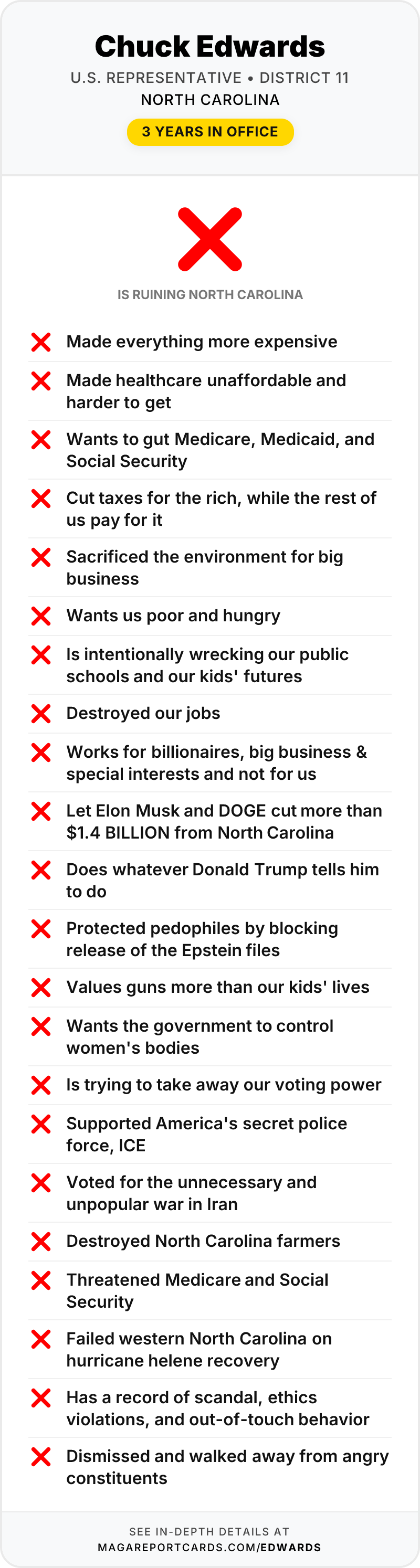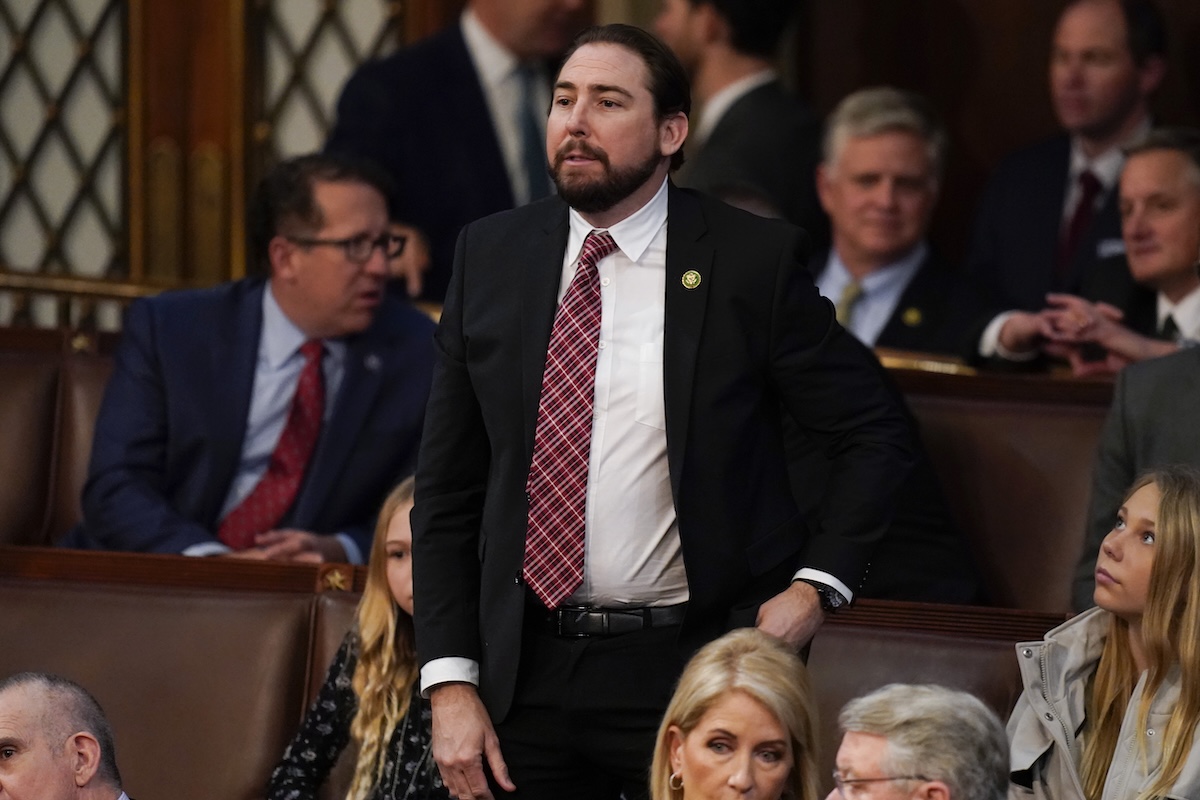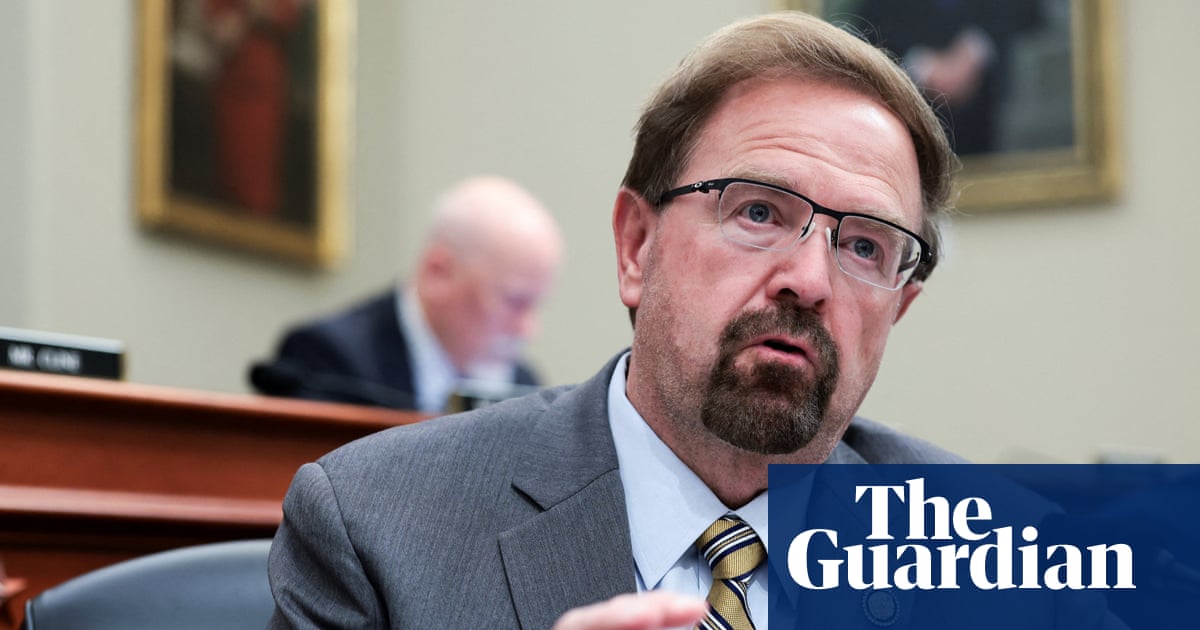
On Monday, August 3, 2026, the House Ethics Committee — five Republicans and five Democrats — recommended that the House of Representatives censure Chuck Edwards.
Censure is the most serious punishment the House hands out short of throwing a member out. If the full House agrees, Edwards has to walk to the front of the chamber and stand there while the Speaker reads the resolution against him out loud.
The committee found "substantial reason to believe" Edwards broke House rules on sexual harassment and hostile workplaces. Two young women who worked for him left Congress because of how he treated them.
Within hours, his re-election campaign put out a statement saying the committee's findings "completely exonerate" him.
Read that again. His own colleagues, from both parties, just recommended he be publicly shamed on the House floor — and his campaign called it an exoneration.
What the committee actually found
You do not have to take anyone's word for this. The committee's report is public. It is built on 16 witness interviews — including one with Edwards himself — and nearly 1,500 pages of documentary evidence.
Here is the committee's summary of what it found, in its own words:
"A Member of Congress should not single out a staffer and isolate them from other staff, make frequent comments regarding that person's appearance and weight, send messages in the middle of the night, text staff deeply personal and seemingly romantic thoughts, intrude on personal occasions without invitation, pay for personal vacations, and spend thousands of dollars on gifts for staffers. That Representative Edwards did all these things to two young staffers, repeatedly over a sustained period, was beyond inappropriate."
One of the women was 19 when she first interned for him back in the state senate. The other was in her early 20s. He brought them both with him when he came to Congress. The younger one was still in college when he insisted on hiring her as his scheduler — over the objection of his own chief of staff, who thought it was a bad idea.
The gifts the committee documented included jewelry worth more than $1,000, designer purses, guns, shoes, flowers, a laptop, a cell phone, a KitchenAid mixer, a robotic vacuum, vacations, show tickets, and one-on-one dinners.
He also:
- Went to one staffer's house to do her yardwork and decorate her Christmas tree
- Booked and paid for her massages and spa treatments
- Took her to a casino, bought her drinks, and paid for her to gamble — then months later printed out her thank-you text, drew a heart next to it, and hand-wrote "Perhaps my proudest personal moment!"
- Wrote her poems, and read one aloud at her going-away party with a slideshow, while crying. Staff in the room testified they were uncomfortable. Edwards admitted he could tell they were
- Arranged for a singer to show up at her birthday party to perform Ed Sheeran's "Hills of Aberfeldy" — a love song — and announce it was "from a special someone." The committee received evidence she told a friend it made her think he did not see her as "just a daughter figure," and that she was "scared lowkey"
After she left his office, he wrote her a letter calling her "the most amazing woman" who had "written a complex chapter in my heart that I will never stop reading."
Asked by the committee whether that letter was meant to be romantic, Edwards said no. He said it was only meant to convey that they had a relationship "on a helping-one-another-out-with-our-chores-and-responsibility level."
"I wrote sexual harassment policy"
This is the part that should stick with you.
Edwards was a businessman before Congress. In his interview with the committee, he told investigators:
"I wrote sexual harassment policy [in the corporate world]. I [] investigated sexual harassment many, many times. I lived a very cautious life."
The committee's response to that was blunt. It wrote that Edwards "seemed to believe that by avoiding inappropriate physical touch, explicitly sexual comments, and occasionally telling the staffers that they were free to put up boundaries with him, he had immunized himself from such a charge."
Then, in four words: "That is not the case."
This is a man who says he knows exactly where the line is. He was, by his own account, the guy who investigated other people for crossing it. And a bipartisan panel found he spent years walking back and forth over it with two young women who worked for him and could not say no.
The committee spelled out why they couldn't. One of the women testified that she "did not know how to say no," that she and her colleague "were both very young" and "were just taught that we needed to be grateful." The other said she felt she had to agree to a trip because she "did not think that having a Member of Congress against me would benefit my career."
He deleted the texts
When the committee asked Edwards for his messages, he handed over some of them. The ones that mattered most were missing.
The committee found his production left out more than 400 non-official text messages with one staffer, plus an entire nine-month stretch for which he produced nothing at all — while at least another 400 messages had been exchanged during it.
The pattern of what went missing is not random. Over and over, the committee found, his production kept the staffer's messages and dropped his replies, so the record made it look like the women were the ones reaching out.
Among the messages he did not turn over, which the committee recovered anyway:
- "I'm burning with jealousy because I wanted to be the person to introduce you to it."
- "You're so fun to be with, so easy to talk to, and I love listening to you."
- "I don't cry often, but I have today."
- "I'm so so SO happy for you but I can't pretend this doesn't sting – deeply. Your absence leaves a space no one else can fill – professionally or personally."
Edwards told the committee he deletes messages "at a whim," and that if something "might have been interpreted in a way that it wasn't intended or that someone may be resentful of, I would occasionally delete it."
The committee did not find that credible. It wrote that his decision to delete exactly those messages "indicates he was aware that their content was cause for concern."
He skipped votes for this
Chuck Edwards is in Congress because he ran against Madison Cawthorn in 2022 and told voters Cawthorn wasn't doing the job.
His pitch, in his own words to Business Insider that May: "My qualms with Madison Cawthorn are based on his performance and his poor attendance record in Congress." Cawthorn, he said, "got caught up in political stardom and turned his back on the people in these mountains."
Now look at what the ethics report says Edwards himself was doing with the job he won.
He texted a staffer the day before offering to "skip votes and help you decorate your tree once you get home tomorrow." He then went and did it. The committee's finding is that he skipped votes in the House that evening to decorate a young staffer's Christmas tree.
And in November 2025 — during the government shutdown — he took a former staffer to Las Vegas. He paid for the flights, two rooms at the Bellagio, and a show at the Sphere. She testified she felt pressured into going, partly because he still had influence over her career. He had to be called back to Washington on the morning of November 10 for the votes to reopen the government.
Here is the detail that tells you what he knew. As they arranged the flight home, the staffer offered to change his ticket herself "so [the scheduler] doesn't have to worry about it or ask why you're in Vegas." Edwards testified he didn't want his own scheduler to know who he was with, because "it would have looked suspicious."
He knew how it looked. He kept doing it.
Eight months before that Vegas trip, Edwards had stood in front of an angry, shouting crowd at a town hall in Asheville and told his constituents there was "no intent from President Trump nor from the Congress to do anything to disrupt payments for Medicare or Social Security."
He had time for the Bellagio and the Sphere. He did not have time to be straight with the people who hired him.
The "exoneration" defense
Edwards' formal response to the committee is a lawyer's brief. His argument is narrow and technical, and it is worth understanding exactly what he is and is not saying.
He is saying: the committee did not find he had sex with a staffer. It did not find quid pro quo harassment. It did not find he broke federal sexual harassment law. He calls censure "an extraordinarily harsh and infrequent punishment" based on "vague standards."
He is not saying: that he didn't do the things in the report.
His response is explicit that "silence elsewhere in this Response does not concede any of the Report's characterizations" — a lawyer's way of not denying the facts. The closest he comes to an apology is that he "sincerely regrets that his behavior created discomfort," followed immediately by the claim that neither woman ever indicated his behavior was unwelcome.
The committee heard that argument and rejected it. Members of Congress, it wrote, "are held to a higher standard than just strict compliance with federal law." It pointed to the rule the House adopted in 2018 banning a member from having a sexual relationship with a subordinate even when it's consensual — proof, the committee wrote, of "the House's clear position that in this unique working environment, even behavior that is consensual can be unethical."
And the committee did not think Edwards had learned anything. Asked directly whether he should have acted differently toward two young women who worked for him, Edwards answered: "I'm going to say no."
The report's closing concern is not about him at all:
"The Committee is concerned that the House regrettably lost two staffers because of Representative Edwards' conduct."
What happens now
The committee plans to bring a privileged resolution to the House floor. The full House will vote on whether to censure him. Edwards has already waived the procedural steps that would have drawn this out — he agreed to let it go straight to a floor sanction.
He is also on the ballot in November, running for a third term in NC-11 against Democrat Jamie Ager. The Center for Politics had already moved the race from "lean Republican" to "toss up" before this report came out.
"My heart goes out to the young women who took these roles to serve our community," Ager said after its release. "We deserve leaders with the moral character western North Carolina can be proud of."
Five Republicans and five Democrats looked at 1,500 pages of evidence and agreed on what happened here. Edwards' answer is that committee staff "have taken it upon themselves to write their own rules," and that he looks forward to having his name cleared.
Two young women left Congress. He's still asking for your vote.
Sources
- "US House ethics panel recommends censure for Republican Chuck Edwards" — Chris Stein, The Guardian, August 3, 2026
- "House Ethics Committee recommends censure for Rep. Chuck Edwards in sexual harassment probe" — Kaia Hubbard and Nikole Killion, CBS News, August 3, 2026
- "Edwards faces House sanctions after committee says it found likely workplace violations" — WRAL, August 3, 2026
- In the Matter of Allegations Relating to Representative Chuck Edwards — U.S. House Committee on Ethics, August 3, 2026
Photo: Evelyn Hockstein / Reuters.