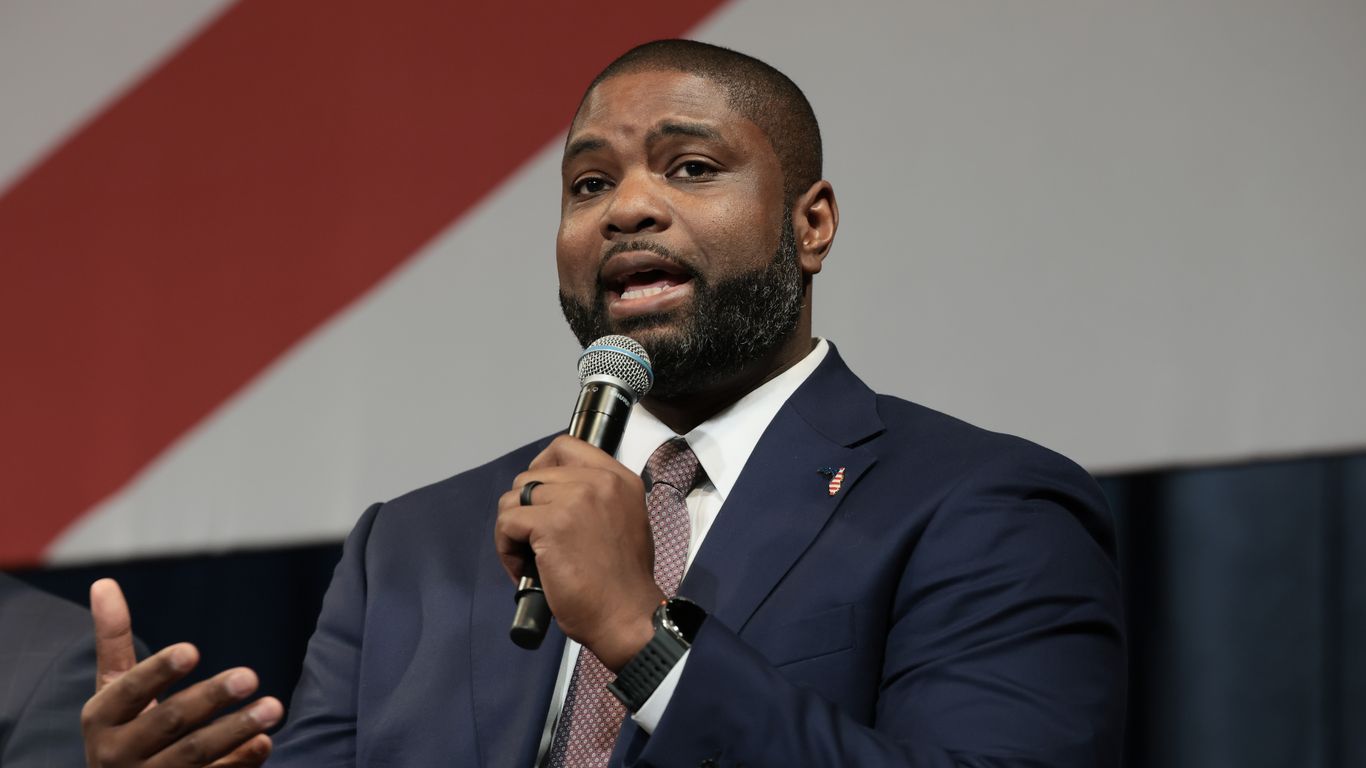
Byron Donalds is the only candidate for governor of Florida who has already served in Florida's state government. That should make him the easiest candidate in the race to evaluate. There is a record. You can read it.
Axios Tampa Bay read it, and then asked him about it. He would not answer.
The bill that would have closed the meetings
Donalds has vowed to give Florida the "most transparent" government in America.
In 2017, as a freshman state representative, he filed a bill that would have let two members of a local board or commission meet privately to discuss official business — no public notice, no record of the meeting.
Florida's Sunshine Law is the reason those meetings are public in the first place. The First Amendment Foundation, which exists to defend that law, panned the bill. Critics said it would render the Sunshine Law "meaningless." It died in the Florida House.
Donalds' argument at the time was that local officials should get to operate under the same rules state legislators do.
Think about what that bill would mean in practice on a county commission of five people. Two of them are a bloc. Two more are another bloc. Under Donalds' bill, each pair could work out its position behind a closed door, and the public would see only the vote — never the deliberation, and never a record that the conversation happened.
The criminal justice bills he also won't discuss
Donalds' state record includes more than the records bill, and some of it is genuinely at odds with how his campaign presents him now.
In 2019 he championed legislation to raise Florida's felony theft threshold from $300 to $1,000. His Republican rivals later seized on it, calling it "pro-shoplifting." His bill went nowhere — but Florida later raised the threshold to $750 through legislation he co-introduced.
He also twice tried to let judges sentence drug trafficking defendants below the mandatory minimum, when those defendants had no serious criminal history and cooperated with prosecutors.
Those are defensible positions. Plenty of conservatives hold them. The problem is not the positions. The problem is that Axios asked Donalds whether he still stands by the public records bill or the criminal justice reforms he championed, and he did not answer.
What his campaign said instead came from communications director Gates McGavick, who told Axios that Donalds "will put affordability, accountability, and public safety front and center in his administration," and that he is "endorsed by 58 Florida sheriffs and the Florida Police Chiefs' Association."
That is a response about endorsements. The question was about his own bills.
Why the dodge is the story
A candidate who has changed his mind can say so. "I filed that bill nine years ago and I was wrong" takes four seconds and costs nothing. A candidate who still believes it can say that too.
Refusing to say either one means the record is available to voters but its owner will not stand behind it or disown it. Every Floridian who wants to know what a Donalds administration would do about open government is left guessing, and guessing is the point.
It also runs directly into the transparency promise. You cannot campaign on running the most transparent government in America and simultaneously decline to describe your own position on the state's open-meetings law.
The pattern with local officials and accountability
Donalds' instinct about who should be able to check whom is on the record elsewhere, too.
He has said he will remove elected local officials who cross him on immigration enforcement — over agreements the state's own lawyers told a judge cities are not required to sign. A lawsuit alleges he threatened to "crush" a school board member. And on the accountability rules that apply to him personally, he demanded "sanctions" for lawmakers who trade stocks improperly, then broke the same disclosure law 108 times.
The common thread is a preference for less scrutiny of himself and more leverage over everyone else.
What the record shows
Byron Donalds filed a bill in 2017 that would have let two members of a local board discuss official business in private with no notice and no record, which critics said would render Florida's Sunshine Law meaningless. He has since promised Florida the "most transparent" government in America. Asked by Axios whether he still stands behind that bill, or behind the criminal justice bills he championed in the Legislature, he did not answer, and his campaign replied by listing police endorsements. He is the only candidate in the race with a state-government record, and he will not discuss it.
Source
Axios Tampa Bay, Donalds won't say if he stands by his record in Legislature, by Yacob Reyes, September 9, 2026.