Temporary Protected Status for Haitians has ended. More than 330,000 Haitian immigrants nationwide held that status. About 35,000 Haitian immigrants work in Florida's health care system — many as certified nursing assistants and registered nurses in long-term care — according to the Florida Health Care Association, the trade group for the state's nursing homes.
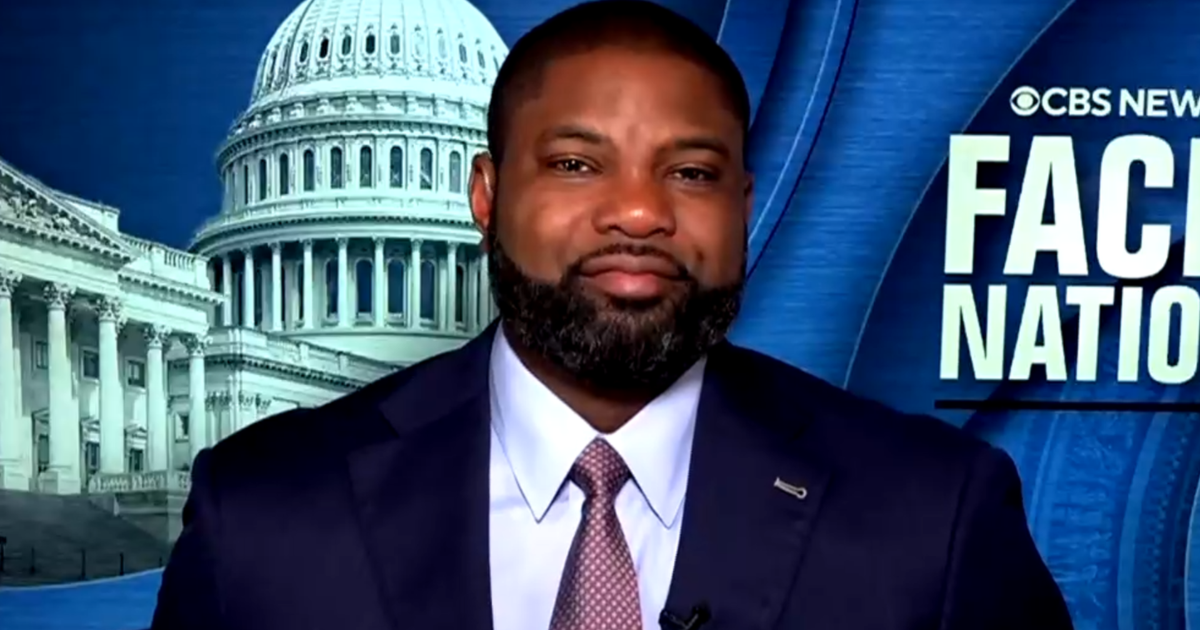
On August 23, 2026, CBS's Margaret Brennan asked Byron Donalds, the Republican nominee for governor of Florida, a direct question about it.
Brennan: "So, do you have a plan to replace the loss of 100,000 Haitians who work in healthcare in Florida if they are deported?"
Donalds: "Well, let's just be very clear. You're talking about the labor force in Florida. What we want to do is, the number one, we want to make sure that our kids coming out of high school are having internships and apprenticeships..."
That is his LaunchPad initiative — a program to connect high school juniors and seniors with internships so that, in his words, "by the time you graduate high school, you're walking directly into the job."
Brennan pressed him on the immediate shortage. Donalds added a second item — retraining adults. "We want to change adult re-education, adult education, career source," he said. "Have that really be supercharged so people can transition from one job or going into those fields." He named no target, no timeline and no cost for either half. Pressed a third time for a state plan, his answer was, "I just gave you the plan, Margaret."
The 100,000 figure in Brennan's question is not the Florida Health Care Association's. The Caribbean Television Network, reviewing the interview, called it out: the larger number "appears to describe Florida's overall healthcare staffing gap rather than the Haitian workforce specifically, and its basis was not explained."
The people he is talking about are already trained
The workers Florida is losing are not high school students who need a foot in the door. They are certified nursing assistants and registered nurses already working in long-term care. The certification is the thing that takes time, and they already have it.
Margarette Nerette is vice president of Long-Term Care South for 1199SEIU, the largest union of health care workers in Florida. She put the stakes plainly:
"This will have a devastating impact on the lives of thousands of healthcare workers and their families now facing possible deportation to a gravely dangerous situation in Haiti."
The people on the other end of that care are nursing home residents. Donalds' answer to losing tens of thousands of their caregivers is a pipeline that starts in eleventh grade, plus an unspecified expansion of adult retraining.
Florida was already running out of nurses
This is not a shortage that has room to absorb a shock.
The Florida Hospital Association estimates the state could be short 60,000 nurses by 2035. That projection was made before Haitian TPS ended. Donalds offered no number of workers his programs would produce, no timeline for producing them, and no cost.
An internship program that places graduating seniors into jobs may be a fine idea on its own terms. It is not a replacement plan for tens of thousands of licensed and certified adults being removed from the workforce this year.
He also defended taking the status away
Donalds is not a bystander to the shortage he was asked to solve.
Earlier in the same interview, he defended ending Haitian TPS directly. "TPS is a temporary program," he told Brennan. "The Biden administration, through enforcement, took the T off the program. They turned that into a permanent program... The Trump administration, in my view, making sure that it's a temporary program is correct." He pointed to Haiti's transitional government as evidence the country is stabilizing — the same country the union representing these workers describes as "a gravely dangerous situation."
So the position is complete, and both halves were stated in the same half-hour: end the legal status that lets these caregivers work, then answer the resulting shortage with a workforce-training pitch carrying no numbers. Both halves are his.
He has taken the employer's side against these workers before
This is a pattern with Donalds, not a one-off answer to a hard question on live television. It ran twice inside this one broadcast.
He co-sponsored a bill to block the first federal heat protections for Florida's outdoor workers. And this was the second Florida health question Brennan put to him in this one interview that came back as immigration: minutes earlier, asked whether his message to parents was to vaccinate their children against measles, he said no and blamed the outbreaks on "rampant illegal immigration." Florida had 141 measles cases by late July.
The through line is consistent. Asked about a health care problem in his own state, Donalds answers with immigration — and when Florida workers are on one side of a policy, he has not been on theirs.
What the record shows
Florida is losing roughly 35,000 Haitian health care workers who staff its nursing homes and long-term care facilities, in a state the Florida Hospital Association already expects to be 60,000 nurses short by 2035. Asked on national television how he would replace them, Byron Donalds named a high school internship program and a supercharged adult-education system, and gave no number, no timeline and no cost for either. Earlier in the same interview he defended ending the legal status that is removing those workers in the first place.
Source
Byron Donalds Says Florida Can Replace Its Haitian Caregivers; Nurses and Unions Push Back — Caribbean Television Network, August 30, 2026, and the CBS "Face the Nation" transcript of the August 23, 2026 interview.