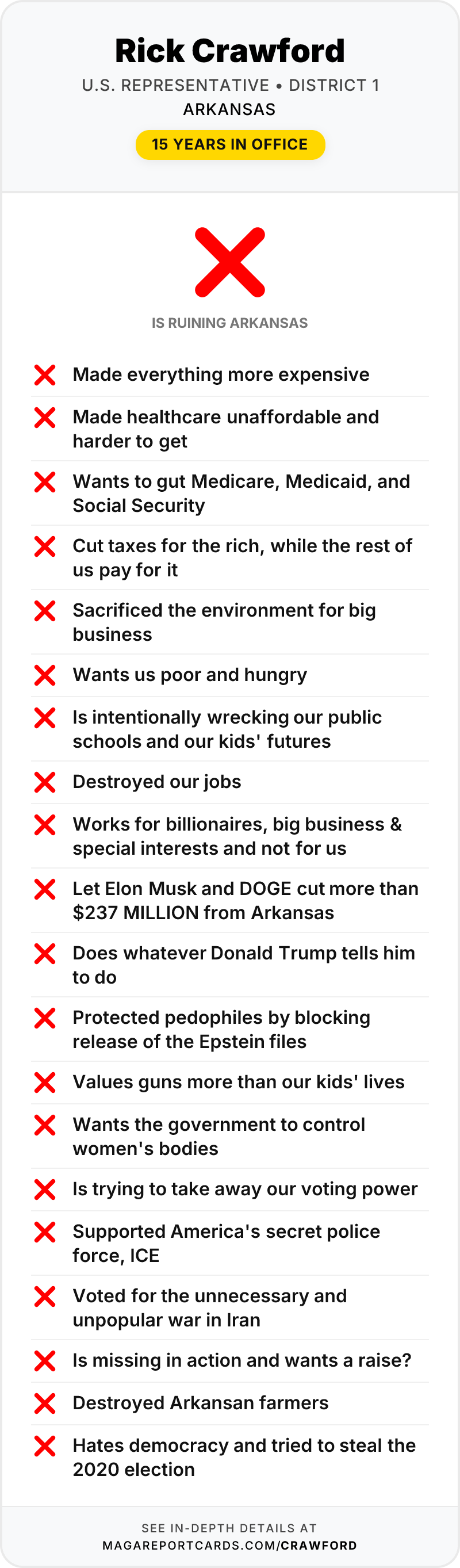
On May 20, 2026, a federal judge handed Rick Crawford a win in a lawsuit most Arkansans have never heard of.
Crawford is one of the members of Congress suing the United States government for a raise. Not a future raise — a retroactive one, going back years, paid by taxpayers.
And the court just said he's allowed to try.
What the ruling said
Judge Eric G. Bruggink of the U.S. Court of Federal Claims ruled that the lawmakers "are not barred from recovering damages," according to Roll Call. He found that the laws Congress passed year after year to block its own automatic cost-of-living raises count as "varying" congressional pay — which the 27th Amendment doesn't allow to take effect before an intervening election.
"Laws varying congressional compensation are ineffective to the extent they seek to effectuate a change in congressional compensation before an election intervenes." — Judge Bruggink
The plaintiffs are Rick Crawford of Arkansas, James Clyburn of South Carolina, and Steny Hoyer of Maryland, plus a group of former members. The case isn't over — the judge indicated it will likely go to a higher court — but the central roadblock is gone.
What it would cost us
Congressional pay has been $174,000 since 2009, when members got a 2.8% bump. The suit says every law since then that blocked the automatic adjustment was unconstitutional, and that members are owed the difference.
The National Taxpayers Union Foundation estimates that back pay claims from 2018 forward would cost taxpayers roughly $69 million, and warns the suit could cost "potentially hundreds of millions more if higher salaries are retroactively incorporated into congressional pension calculations."
We don't have to guess at Crawford's own share. Under the 2018 cutoff an earlier ruling imposed, NTUF reports that the plaintiffs are seeking $418,796.08 each for Clyburn, Crawford and Hoyer, and $226,367.39 each for the two former House members still eligible.
NTU didn't mince words about it. The group argued that "the plaintiffs, as statesmen, should withdraw their lawsuit," because winning would "worsen the public's already poor opinion of Congress while significantly adding to debt burdens."
What $418,796 means in Arkansas's First District
Here's the number that matters.
Arkansas's median household income is $56,335, and median individual income is under $32,000, as the Mountain Home Observer noted when the suit was filed. Crawford's current salary is already about five times what the average person in his district earns.
A $418,796 back-pay check would be more than seven years of income for a typical Arkansas household — handed over in one payment, for work he already did, at a salary he already accepted, in a job he keeps running for.
His constituents noticed. Norma Bohaty wrote to the paper:
"If Rep. Crawford thinks his $174,000 a year salary isn't enough, why did he run for reelection?"
And:
"I am shocked, dismayed, and bewildered by your decision to sue the U.S. Government for a pay raise because you feel you are underpaid at $174,000 a year."
Crawford's office did not provide the paper a statement.
The part that makes it worse
Rick Crawford has opposed measures to raise Arkansas's minimum wage.
Sit with that for a second. A raise for the people stocking shelves in Jonesboro: no. A retroactive raise for himself, ordered by a federal court, paid by those same people: yes, and he hired lawyers.
The rest of his record points the same direction. Crawford voted for Trump's budget bill, which together with the health insurance tax credits that expired at the end of 2025 will leave 40,000 more people in his district without health insurance by 2034. In January 2026 he was one of all four Arkansas Republicans who voted against extending the health care subsidies that keep premiums affordable. He stood by while DOGE cancelled a $1.8 million Department of Education grant to the Cross County School District and terminated the leases on Social Security, Farm Service Agency, soil conservation and rural housing offices in the First District.
Belt-tightening for the district. A lawsuit for himself.
And he won't take questions about it
The last in-person town hall Rick Crawford's own office announced was in Heber Springs on March 4, 2017.
That's not an oversight; it's a pattern that goes back to the beginning. His very first town hall as a freshman in 2011 ended early after tough questions about tax cuts for the wealthy — "We're done," he told the room. He has largely avoided the format ever since.
So there is no room in Arkansas where a farmer or a nurse or a truck driver gets to stand up and ask him why his salary is a constitutional injury when their wages aren't.
This isn't unique to him. We've written about Mike Rogers collecting a taxpayer pension while worth millions, and about the 45 Republicans we cover who broke the law meant to stop insider trading in Congress. The job keeps paying better than the people who fund it, and the people doing it keep finding new ways to say it isn't enough.
The bottom line
Rick Crawford has been in Congress since 2011. In that time the pay has stayed at $174,000 — and so has his ability to leave any time he wants. Nobody is making him serve.
Instead he went to court, alongside colleagues from both parties, to argue that the country owes him hundreds of thousands of dollars for years he already agreed to work.
In May, a judge told him he can keep trying.
We deserve a congressman who fights this hard for our paycheck.
Source
Roll Call, "Judge weighs in on lawmaker cost-of-living case", May 21, 2026, reporting a ruling issued the previous day.
National Taxpayers Union Foundation, "While Debt Soars, Some Lawmakers Seek Retroactive Salary Hikes in Federal Court", February 19, 2026 — the per-plaintiff damage claims.
National Taxpayers Union Foundation, "Taxpayers on the Hook for Congressional Back Pay Lawsuit", April 21, 2026 — the $69 million estimate.
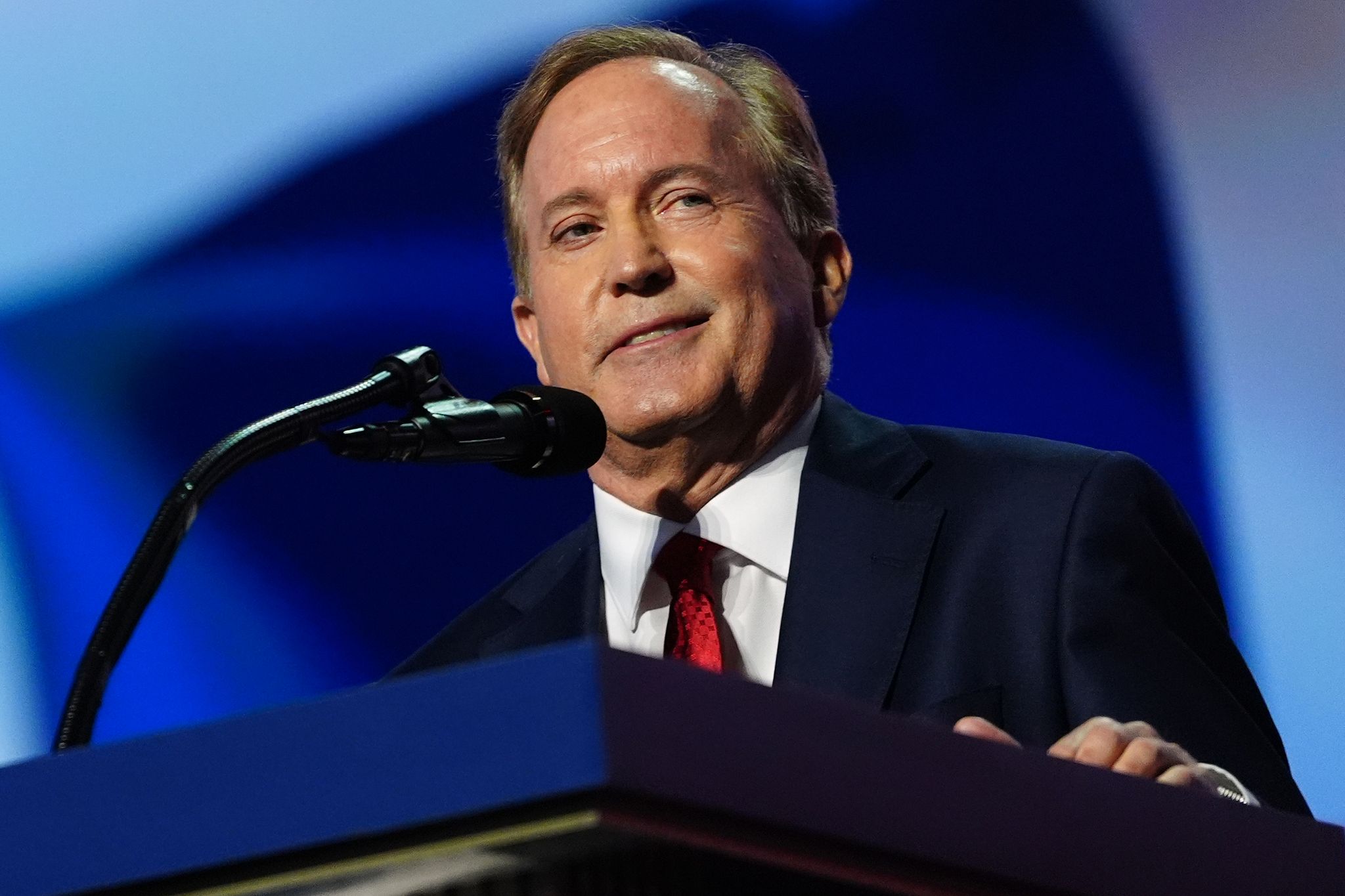
Photo: U.S. House of Representatives.