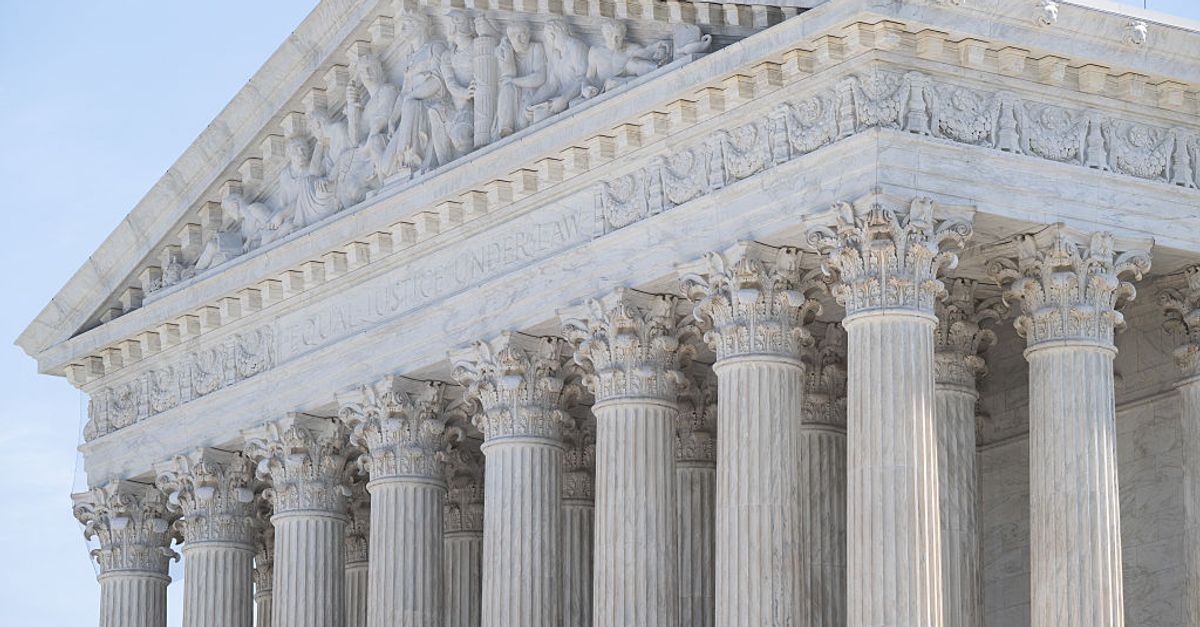
On June 30, 2026, the Supreme Court of the United States decided Trump v. Barbara and struck down the executive order that would have ended birthright citizenship.
The vote was 6–3. Chief Justice John Roberts wrote the majority opinion. Justice Amy Coney Barrett joined it. Justice Brett Kavanaugh agreed the order was invalid, though on statutory rather than constitutional grounds.
Roberts stated the holding, about children born in this country to parents here unlawfully or temporarily, plainly:
"Under the Constitution, they are citizens at birth."
He noted the precedent had been settled since 1898, when United States v. Wong Kim Ark established that "the Citizenship Clause incorporated the common law and granted citizenship to nearly all children born in the United States."
Justices Alito, Thomas, and Gorsuch dissented.
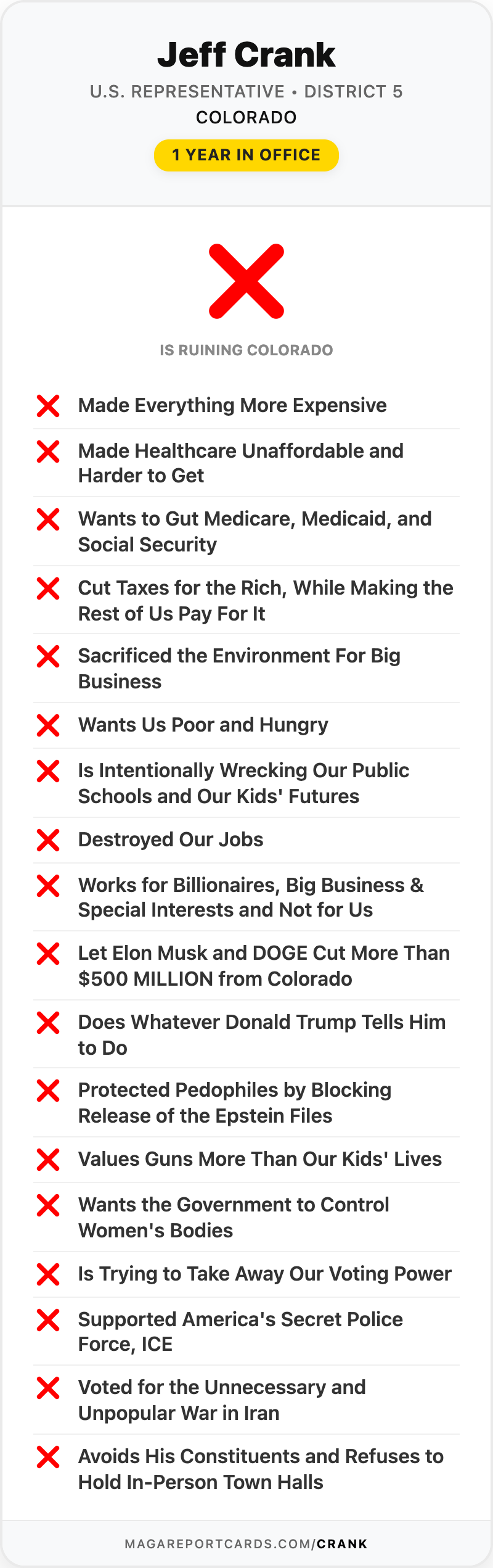
Jeff Crank went on Newsmax and said he was disappointed.
What He Said
Crank's comment, as reported by the Colorado Times Recorder:
"[I'm] very disappointed in the Supreme Court's decision on birthright citizenship. I do think we live in an era where people are coming to the United States to take advantage of our kindness and our goodness. We do need to address this."
He added that he would be meeting with House leadership in the following week to figure out what the House could do about it.
The paper asked his office whether that meeting had actually been scheduled. His office didn't respond.
What "Address This" Would Actually Require
Here is the part that doesn't fit in a cable hit.
The Court did not say the executive order was poorly drafted, or that the President used the wrong procedure, or that a statute was missing. It said the order violates the Fourteenth Amendment — the text that says anyone "born … in the United States, and subject to the jurisdiction thereof" is a citizen.
That means Congress can't fix it by passing a bill. Five justices just held that the Constitution itself decides this question. Changing it takes a constitutional amendment: two-thirds of the House, two-thirds of the Senate, and ratification by 38 states.
There is no version of "meeting with House leadership" that gets around a constitutional holding by the Roberts Court.
There is a bill that pretends otherwise. The Birthright Citizenship Act of 2025 (H.R. 569) was introduced in January 2025 and has 93 cosponsors. Crank isn't one of them. He has been in Congress since January 2025 and hasn't signed it in nineteen months — including in the weeks since he said "we do need to address this."
So the record is: a statement of disappointment on television, a promised meeting his office wouldn't confirm, and no name on the one bill in the House that claims to do the thing.
Who This Is Actually About
Birthright citizenship is not primarily a rule about immigrants. It's a rule about how the United States proves anyone is a citizen.
Right now, if you were born here, your birth certificate is the whole answer. That's it. That's the system. It works for everybody — the fifth-generation rancher in El Paso County and the baby born down the hall from him last year — because the question the government asks is simply where were you born.
Take that away, and the question becomes what was your mother's immigration status on the day you were born — a fact most Americans have never had to document and many couldn't produce on demand. Every parent in the country would need paperwork proving their own status to establish their child's. Hospitals would be sorting newborns into categories.
The Fourteenth Amendment was written after the Civil War precisely to take that discretion away from politicians — so citizenship couldn't be handed out or withheld based on who your parents were. That's the design. It's not a loophole somebody found.
He Keeps Landing on the Same Side of Due Process
This is the second time in Crank's short congressional career that he's ended up arguing against a court that told the executive branch it had gone too far.
In April 2025, three weeks after the administration flew 238 people to a maximum-security prison in El Salvador without hearings, Crank was the lead sponsor of a House resolution endorsing the removals and affirming the President's authority to carry them out. Two federal courts later ruled otherwise — one finding the men had been removed unlawfully, without notice or a chance to be heard.
Both times, a court applied a constitutional limit to what a president could do to people. Both times, Crank's public position was that the President should have won.
That's a pattern, and it's worth naming for what it is: a member of the branch that is supposed to check executive power, using his platform to argue that the checks keep getting in the way.
Sources
Colorado Times Recorder, "Colorado Congressman 'Very Disappointed' Supreme Court Upheld Birthright Citizenship" (July 7, 2026), and the Supreme Court's opinion in Trump v. Barbara, No. 25-365 (June 30, 2026). Photo: Saul Loeb/AFP via Getty Images, via SCOTUSblog.