There are about 48,800 veterans living in Oregon's 2nd Congressional District. That's who this is about.
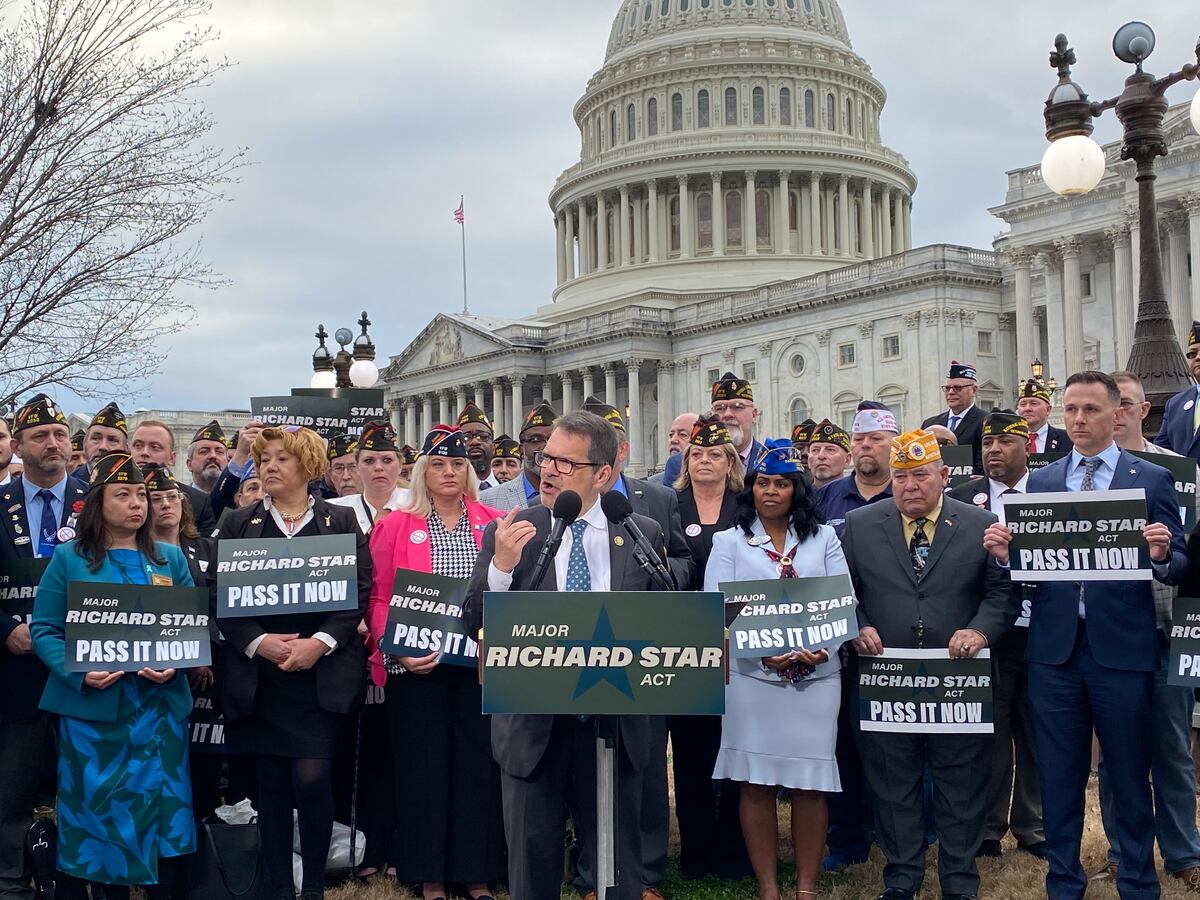
On July 13, 2022, the U.S. House passed the Honoring our PACT Act — the law that presumes a long list of cancers and respiratory illnesses were caused by military service, so veterans poisoned by burn pits and other toxic exposures no longer have to prove it one claim at a time to get VA health care.
It wasn't close, and it wasn't partisan. The vote was 342 to 88. 123 Republicans voted yes. Every Democrat present voted yes.
Cliff Bentz voted no.
He was the only member of Oregon's House delegation — of either party — to do it. Every other Oregon representative voted yes.
He'd already voted no once
That July vote was the second time. On March 3, 2022, the House passed the same legislation in its original form, H.R. 3967, by 256 to 174. Bentz voted no then too — again, the only member of Oregon's delegation to do so.
Two chances. Two no votes. Both times, alone among Oregon's five House members.
The bill became law on August 10, 2022. It is the mechanism by which a veteran from Klamath Falls or Pendleton or Grants Pass who came home from Iraq with a lung disease gets treated without spending years arguing with the VA about whether a burn pit overseas caused it.
And a third vote, six months earlier
On January 12, 2022, the House passed the Guard and Reserve GI Bill Parity Act, H.R. 1836, which extends the same GI Bill education benefits to National Guard members and reservists that active-duty service members already get. It passed 287 to 135.
Bentz voted no on that too.
Three votes on veterans' benefits in seven months. Three no votes.
What his district actually looks like
Bentz's district is most of Oregon east of the Cascades plus Jackson, Josephine and more than half of Douglas County in the southwest — a huge, rural, working district. Census data puts the veteran population at 48,812, about 8.7% of the district's civilian adults.
These are also the constituents least able to absorb a denied claim. Nearly 58,000 households in the district — one in five — use SNAP to buy groceries. An estimated 37,946 people in the district are projected to lose health coverage by 2034 — 36,246 of them on Medicaid — because of the health care cuts he voted for in 2025. A VA presumption is not an abstraction to a household like that. It is the difference between treatment and a bill.
"Everybody has to step up"
The reason these votes land differently than an ordinary policy disagreement is the standard Bentz applies out loud to everyone else.
In February 2025, he told CNN's Jake Tapper he'd support cutting his own congressional staff to help shrink the budget: "I think everybody has to step up." The month before that, his office had outspent every other office in the House of Representatives on travel over Trump's inauguration weekend — $20,750 for four staffers over one long weekend.
Everybody has to step up, except the four staffers who billed $16,300 in hotel rooms. Fiscal discipline that arrives at the VA and stops at the inauguration-weekend hotel bill isn't fiscal discipline. It's a preference about who deserves the money.
The company he kept
Being one of the 88 votes against the PACT Act was a choice. A majority of House Republicans — 123 of them — went the other way. So did every single Democrat who voted.
Bentz has been in Congress since 2021 and is Oregon's only Republican in Washington. He talks often about the military, and about veterans.
But the two moments when the House was asked, directly, to pay for the medical consequences of sending people to war, he said no. And the moment it was asked to give the National Guard the same education benefit as everyone else in uniform, he said no to that too.
Every other member of Oregon's House delegation said yes.
Sources
The votes are public record: Roll Call 57, March 3, 2022 (H.R. 3967, Honoring our PACT Act, 256–174); Roll Call 309, July 13, 2022 (S. 3373, the Senate bill the House amended to carry the PACT Act, 342–88; the Senate then agreed to the House amendment 86–11 on August 2); and Roll Call 6, January 12, 2022 (H.R. 1836, Guard and Reserve GI Bill Parity Act, 287–135). Photo via Wikimedia Commons.