This summer, Americans got sick from lettuce.
The Centers for Disease Control and Prevention declared the outbreak over on September 11. By its count, 12,883 people were infected with cyclospora, a parasite that causes days of watery diarrhea, cramps and fatigue. 570 were hospitalized. Two died. The outbreak was linked to iceberg lettuce from Taylor Farms de Mexico. At its peak, before the recall, more than 1,000 people were getting infected in a single day.
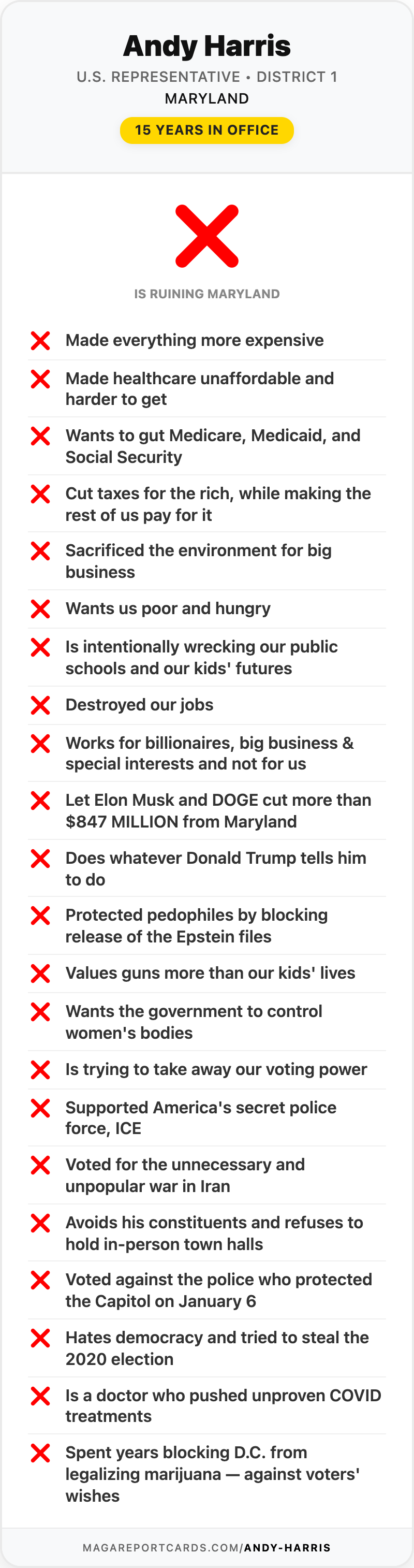
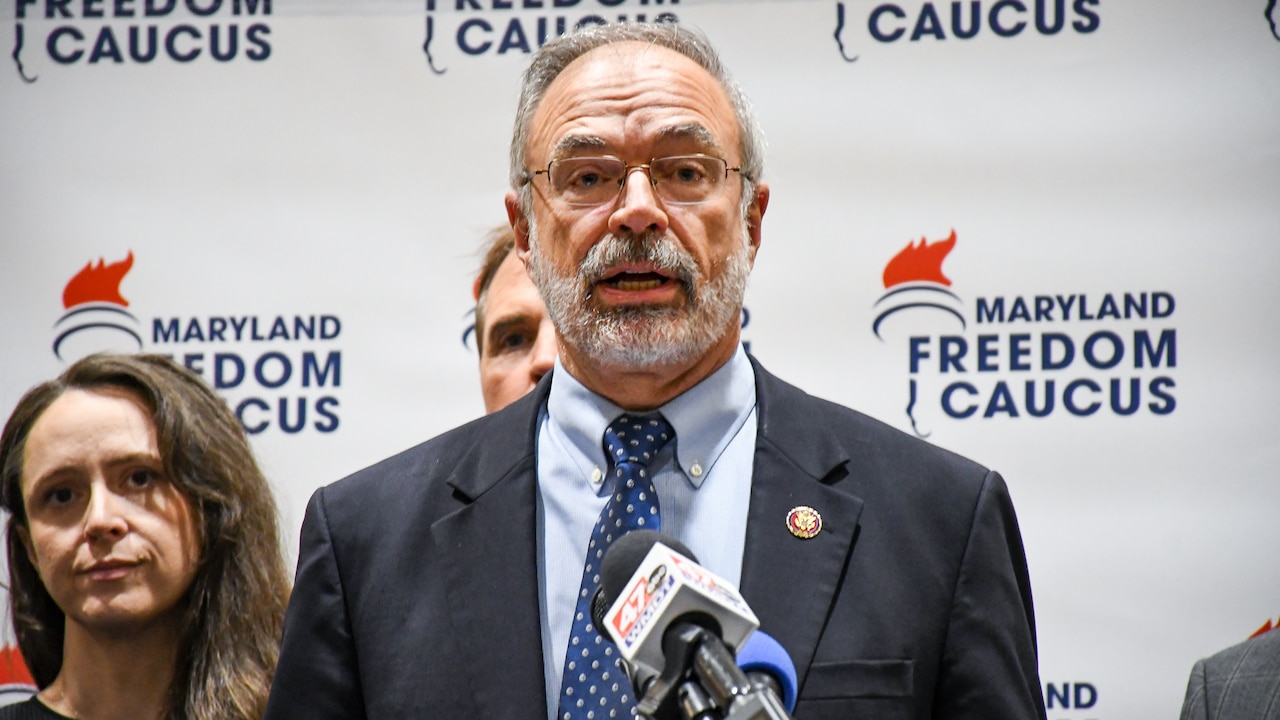
A food-safety rule that's been on the books since 2022 is designed to help investigators find the source of outbreaks like this one quickly. It isn't being enforced. And Andy Harris, Maryland's only Republican in Congress, runs the subcommittee that writes the budget keeping it that way.
The rule that could have helped
The Food Traceability Rule comes out of the Food Safety Modernization Act, which President Obama signed in 2011. It requires food businesses that handle certain high-risk foods, like leafy greens, to keep tracking records with lot codes, so that when people get sick, investigators can follow the food back to where it came from.
Congress told the FDA to write it by 2013. According to Baltimore Banner columnist Rick Hutzell, the agency didn't finish it until a judge ordered it to, and the final rule came out in 2022. Companies were supposed to comply by January 20, 2026.
Then the delays started. After Trump returned to office, his administration pushed the deadline back to 2028.
Then the delay went into law
Harris chairs the House Appropriations subcommittee that funds agriculture and the Food and Drug Administration. He announced being named chair again in 2025.
That subcommittee's agriculture and FDA funding bill became part of a 2025 spending law, Public Law 119-37. Section 780 says:
"No funds appropriated by this Act may be used to administer or enforce the 'Requirements for Additional Traceability Records for Certain Foods'... prior to July 20, 2028."
It also told the FDA to meet every quarter with farms, restaurants, grocery stores and warehouses to find "additional flexibilities" in the rule.
Hutzell writes that when two members of Harris' subcommittee tried to pass the delay as a standalone bill, it failed. So it went into the FDA's budget instead. As he put it: Harris controls that process, and nothing gets approved in committee without the chair.
"It never should have been as big as it was"
Bill Marler is a lawyer who has represented food-poisoning victims since a deadly E. coli outbreak at Jack in the Box in the 1990s. He told the Banner that tracing records would have pointed investigators straight at the source:
"It never should have been as big as it was. If you had been able to get traceability, you would have said, 'Oh, yeah, they were farmed from Mexico. Boom! Let's get this stuff off the market.'"
Food safety and consumer groups agree. In an August 12 letter, the Safe Food Coalition urged congressional leaders to repeal the delay, pointing to this outbreak and arguing that the rule would enable faster and more effective outbreak investigations.
Who wanted the delay
The food industry. According to Hutzell, the Food Industry Association warned the Department of Health and Human Services in July 2025 that the rule would raise food costs. Its president later praised the delay, calling the rule "unworkable in its current form."
That same association has given Harris its Thomas Jefferson Award twice, calling him a champion of the food distribution industry.
Marler's read on why the rule keeps slipping: "the businesses that don't want to pay for this or don't want to go to the difficulty of doing this are using their influence in Congress."
Food safety keeps losing
This isn't the only way Harris' budget has weakened the government's ability to keep food safe. In June, the House passed his subcommittee's next agriculture and FDA funding bill, which, in the Appropriations Committee's own words, cuts salaries and expenses "to account for staffing reductions" after the FDA lost thousands of workers. Harris was one of 188 members we track who voted for it.
Harris is a retired anesthesiologist. He says Americans "all depend on a safe food and drug supply." He didn't respond to the Banner's questions about the traceability rule or his role in delaying it, and he doesn't appear to have said anything about the outbreak.
What the record shows
Andy Harris chairs the House subcommittee that writes the FDA's budget. The spending law that includes that budget bars the FDA from using any of its money to enforce the Food Traceability Rule, which requires tracking records meant to speed up outbreak investigations, before July 20, 2028. This summer, a cyclospora outbreak linked to Mexican lettuce infected 12,883 people, hospitalized 570 and killed two, according to the CDC. A food-poisoning lawyer and a coalition of food-safety groups say the rule would have helped investigators find the source faster. The food industry group that pushed against the rule has given Harris its top award twice.
Source
- The Baltimore Banner: Hutzell: Andy Harris helped make Americans sick this summer
- Public Law 119-37, Division B, Section 780
- CDC: Cyclospora Outbreak Linked to Iceberg Lettuce
Photo: Pamela Wood/The Banner.